Your bottom bracket is the axle-and-bearing assembly that sits in the frame where your pedals and crank arms connect. It is one of the most load-bearing parts on any bike, and it is also one of the most standard-fragmented — meaning there are at least half a dozen incompatible cup sizes, notch patterns, and thread standards in common use right now. When it is time to remove or install a BB cup (the threaded ring that holds the bearing in the frame), you need a tool that engages the notches or splines on that cup precisely. Use the wrong tool, and you strip the cup. Use a tool that almost fits on a stubborn cup, and you will ruin a $60–$120 component in seconds.
This article is for mechanics who have already done a BB job or two and are now asking the sharper question: should I own a versatile 6-in-1 multi-standard tool, a purpose-built single-size wrench, or both? We will break down the real tradeoffs, show the cost math, and give you a clear decision rule based on your actual shop situation.
Why Bottom Bracket Tool Standards Are Still a Mess in 2026
If you are maintaining a fleet of bikes — or even just two or three machines with different groupsets — you have already felt this pain. Shimano Hollowtech II external cups use a 16-notch, 44 mm engagement. SRAM GXP uses a similar outer diameter but a different notch count on the non-drive side. Older Shimano and many budget bikes use 36 mm or 39 mm threaded cups. FSA and Truvativ have their own variations. Then there are press-fit formats entirely.
According to Sheldon Brown’s Bottom Bracket Standards reference guide at sheldonbrown.com, external threaded BB cups have been produced in at least five distinct notch-engagement configurations across major manufacturers — and that count does not include proprietary thread standards like Italian-thread or BSA variants. BikeRadar’s article “Bottom Bracket Standards Explained,” published on bikeradar.com, confirms that even experienced mechanics frequently encounter an unknown BB when working on a customer’s bike or a secondhand frame where documentation has been lost.
The practical consequence: a single-size dedicated tool works perfectly for your BB — until you work on a friend’s bike, buy a new frame, or upgrade groupsets and land on a different cup design.
6-in-1 Tools: The Versatility Case, With Real Numbers
The appeal of a 6-in-1 bottom bracket tool is straightforward: one purchase covers the engagement profiles you are most likely to encounter across modern road, gravel, and MTB drivetrains. The defining use case, reported consistently across owner feedback for multi-standard BB tools in this category, involves using one end of the wrench to remove an old BB cup, repositioning the tool, and installing a different-size cup in the same session. That is not a theoretical edge case; it is exactly what happens when you are upgrading from an entry-level threaded BB to a Shimano Hollowtech II external cup.
One representative scenario from aggregated owner accounts: a mechanic used a 6-in-1 tool to remove one BB standard, install a different one, and then immediately helped a neighbor whose BB size was unknown — and the tool covered that third profile too. Three engagement profiles in one shop session. A single-size wrench collection covering the same ground requires at minimum two or three separate purchases.
By the numbers:
| Scenario | Single-size tools needed | Estimated cost (dedicated tools) | 6-in-1 equivalent cost |
|---|---|---|---|
| One bike, one BB standard | 1 | $15–$35 | $25–$50 |
| Two bikes, two BB standards | 2 | $30–$70 | $25–$50 |
| Shop serving mixed fleet (3+ standards) | 3–5 | $75–$175 | $25–$50 |
The cost-per-standard math favors the multi-tool once you are beyond a single-bike, single-BB-standard situation. At the two-bike threshold, the 6-in-1 is already roughly price-competitive; at three or more, it is clearly the lower total-cost-of-ownership choice.
Budget 6-in-1 Option
For mechanics who need multi-standard coverage and are working with a constrained budget, an entry-level 6-in-1 BB cup tool delivers the core engagement profiles — typically 12-notch and 16-notch at both 39 mm and 44 mm — at a price point that undercuts even two dedicated single-size tools. Handle quality varies; inspect grip rigidity before committing.
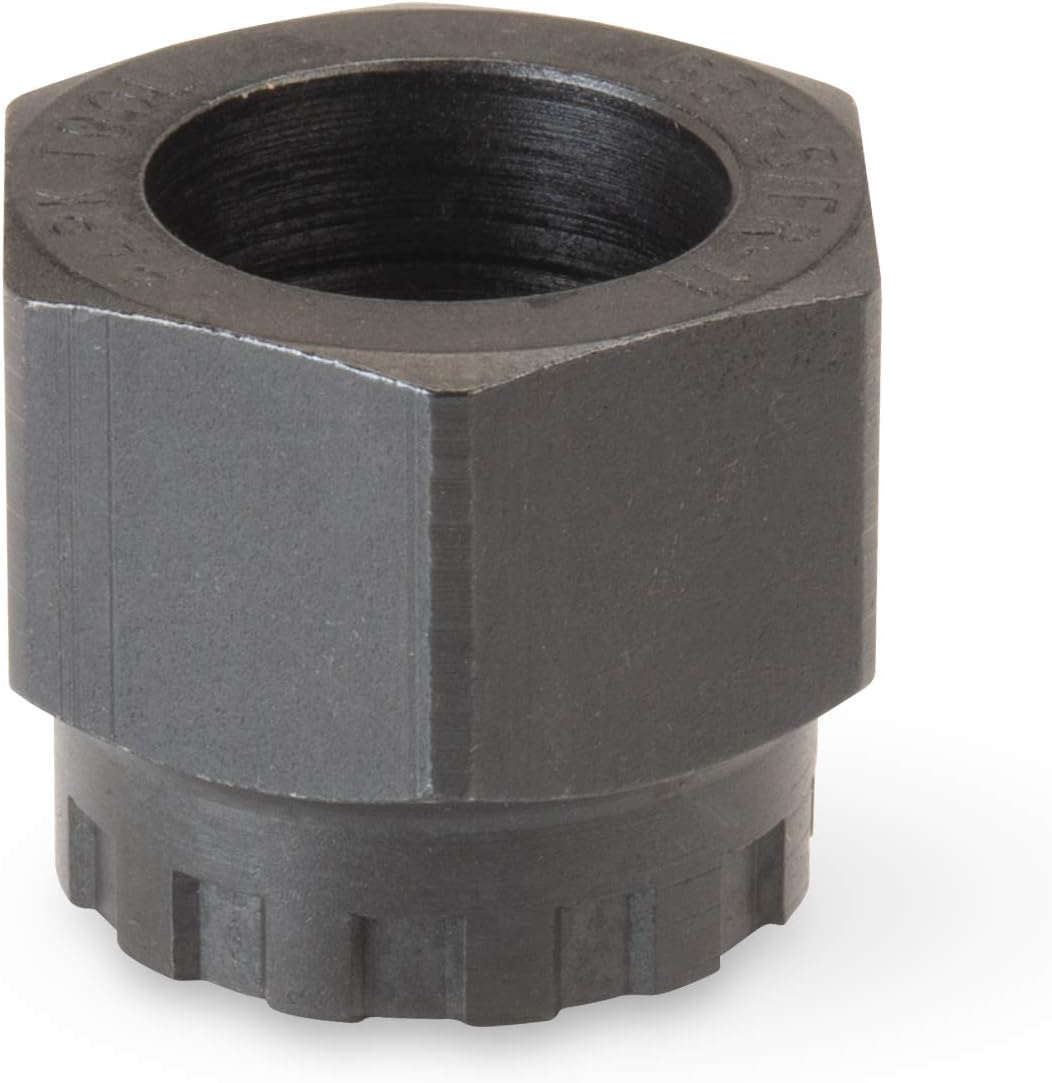
Park
$9.95
In stock on Amazon
Check price on AmazonMid-Tier 6-in-1 Option
Mid-range 6-in-1 tools — such as the GEWAGE Hollowtech II tool, which draws consistently positive owner mentions for grip comfort — add meaningful handle rigidity over budget alternatives. This matters specifically because a flexing handle telegraphs movement into the cup engagement and raises strip-out risk on aluminum cups. If you are doing more than occasional BB work, the step up in handle quality is worth the modest price difference.
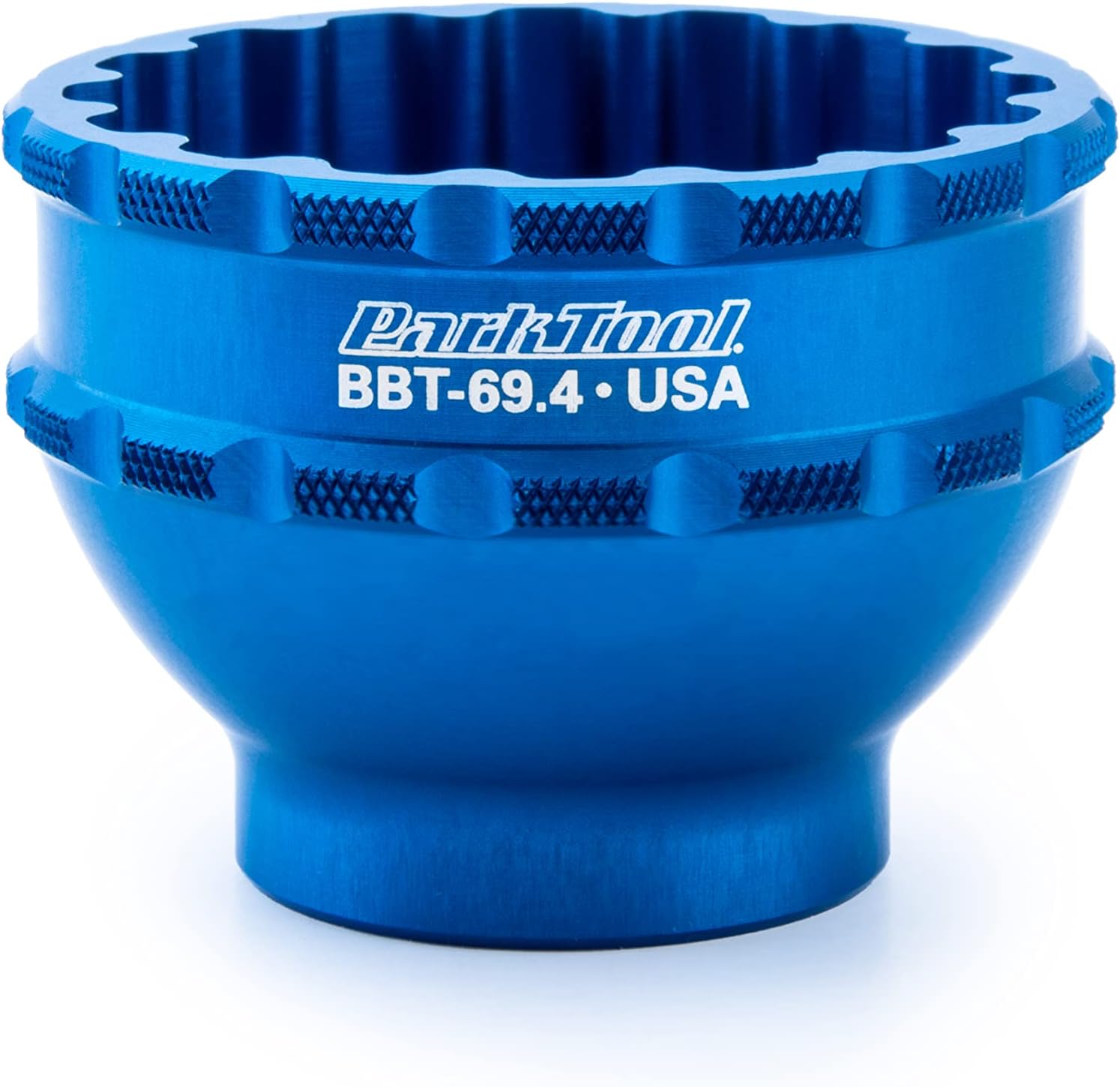
BBT,
$29.95
In stock on Amazon
Check price on AmazonPremium Single-Size Option
The Park Tool BBT-5, described in detail in the section below, represents the premium dedicated-tool tier. It is not a 6-in-1, but for mechanics whose work is concentrated on Shimano Hollowtech II external cups, it is the highest-engagement-quality option available at its price point.
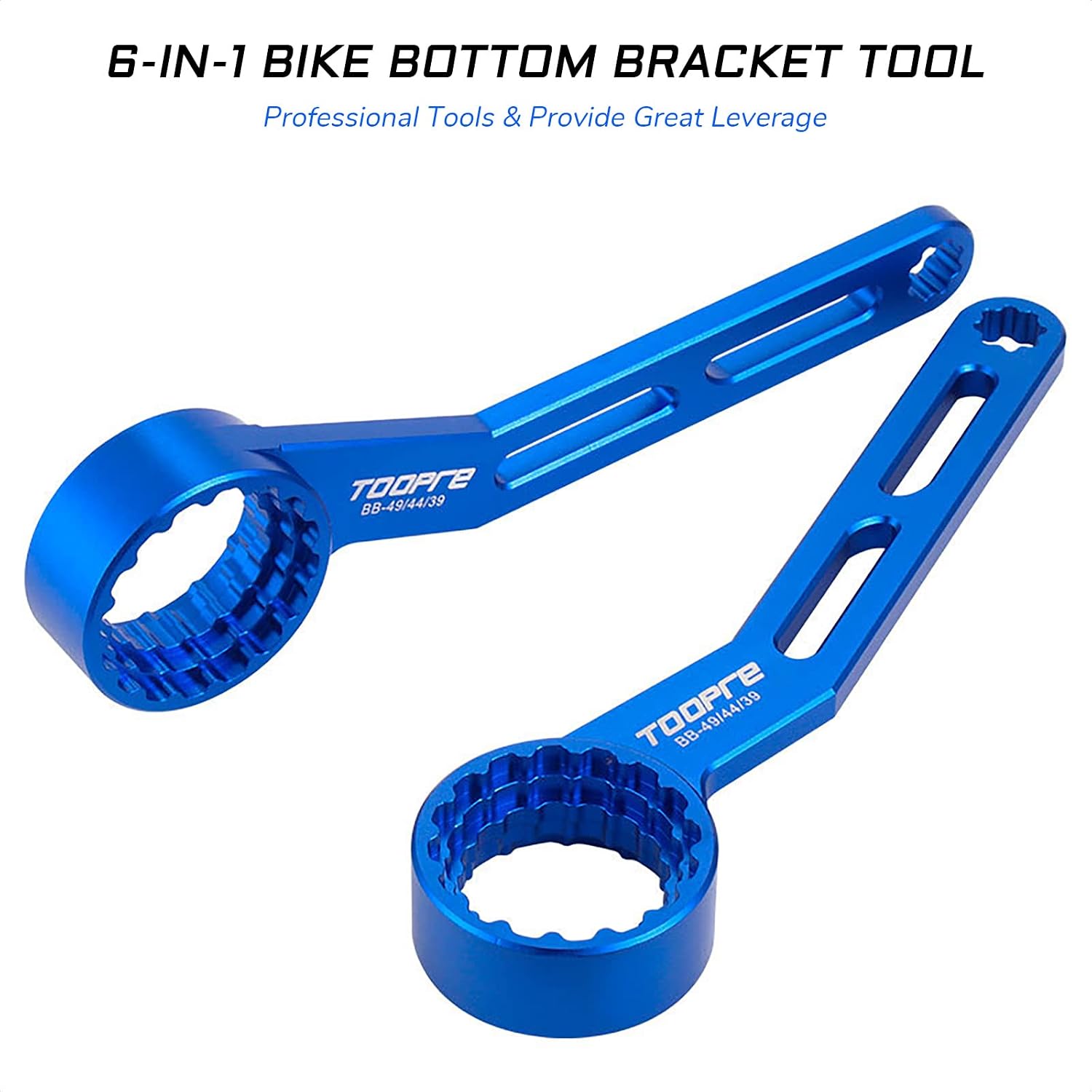
6-in-1
$29.99
In stock on Amazon
Check price on AmazonThe Case for Dedicated Single-Size Tools: When Precision Outweighs Versatility
The argument for a dedicated, single-standard tool is not nostalgia — it is torque precision and engagement quality. When a tool is designed around exactly one cup profile, the manufacturer can optimize wall thickness, notch depth, and handle leverage for that specific geometry. The result is a tighter fit, less rocking under load, and a lower risk of rounding out a stubborn cup.
The Park Tool BBT-5 is the clearest example of this principle in the market. It is purpose-built for Shimano Hollowtech II external cups — the 44 mm, 16-notch standard that dominates current road and MTB Shimano groupsets from Deore through Dura-Ace. According to the Park Tool product page for the BBT-5 at parktool.com, the tool is compatible with the full range of Shimano external cup BBs and is specifically sized for the 16-notch pattern. Owners consistently cite solid engagement with no play — the tool does not wobble in the cup under torque, which matters enormously when applying the 35–50 N·m that Shimano specifies for cup installation in the Hollowtech II Bottom Bracket Installation Manual SI-86B0A, available through si.shimano.com.
One nuance worth naming directly: the Park Tool BBT-5 has earned a notable off-label reputation among its owners. Multiple users report using it primarily for Shimano centerlock disc brake rotor installation rather than bottom brackets — the 16-notch, 44 mm engagement profile happens to be compatible with centerlock lockrings on many wheelsets. This is a legitimate crossover use that increases the BBT-5’s value-per-purchase, particularly for mechanics who also manage disc-brake conversions or wheel builds.
But here is where the dedicated-tool argument runs into a concrete real-world problem: some mechanics have documented needing two different dedicated tools to complete a single BB job — because the drive-side and non-drive-side cups had different notch counts. This is exactly the scenario a 6-in-1 tool is designed to prevent. If you are ever unsure whether both cups on a given BB share the same engagement profile (and with third-party or budget BBs, uncertainty is reasonable), a multi-standard tool is the lower-risk default.
Handle Quality: The Detail Most Buyers Underweight
Budget multi-tool kits often compromise on the handle — and with bottom bracket work, where you are applying serious rotational force to a potentially seized component, handle rigidity matters more than it does on, say, a cassette lockring tool.
The GEWAGE Hollowtech II tool draws consistently positive owner mentions for grip comfort — a detail that surfaces repeatedly and contrasts with complaints across competing budget combo kits where flimsy handles flex under load or develop stress cracks after several uses. This is not a minor ergonomic preference. A flexing handle telegraphs movement into the cup engagement, increasing strip-out risk on aluminum cups. Handle quality is worth evaluating explicitly before purchasing any multi-standard tool, not just checking the notch-count specification list.
For professional-grade single-size tools, Park Tool’s handle construction has been noted in BikeRadar’s tool coverage as a consistent quality differentiator. The BBT-5 uses a forged body that owners describe as notably rigid under torque.
Decision Framework: If X, Then Y
You have read the tradeoffs. Here is how to make the call:
If you maintain one bike with one known BB standard and you are confident that will not change in the next two years — buy the dedicated tool. The Park Tool BBT-5 is the right choice for anyone with a Shimano Hollowtech II external BB, and its centerlock rotor compatibility gives it extra value in a disc-brake shop. You will get better engagement, better torque feel, and a cleaner tool drawer.
If you maintain two or more bikes with different BB standards, or you regularly help friends and neighbors — buy the 6-in-1. The cost math favors it immediately, and the ability to handle an unknown-standard BB without a second purchase is a genuine workflow advantage. Pay close attention to handle quality when choosing which 6-in-1 to buy.
If you are a small-shop mechanic or coach running a mixed fleet — buy both. The 6-in-1 handles triage and unknown-standard situations; the dedicated Park Tool BBT-5 stays on the bench for high-torque Shimano jobs and centerlock work where engagement precision is non-negotiable. Total outlay is still well under $100, and the total-cost-of-ownership math remains sound compared to assembling a full set of dedicated single-size tools.
Frequently Asked Questions
How do I find out if my bottom bracket uses 12-notch or 16-notch engagement? The fastest method is to look up your BB by brand and model. Shimano Hollowtech II external cups are 16-notch at 44 mm; many older or budget external BBs use 12-notch at 39 mm or 36 mm. If you do not have documentation, Sheldon Brown’s Bottom Bracket Standards guide at sheldonbrown.com is the most reliable free reference for cross-checking by brand, and BikeRadar’s “Bottom Bracket Standards Explained” includes visual identification guidance. A digital caliper measuring the outer diameter of the cup flange will confirm whether you are in 39 mm or 44 mm territory.
Will a 6-in-1 BB tool work for Shimano centerlock disc rotor installation? Often, yes — if the tool includes a 44 mm, 16-notch profile, which most quality 6-in-1 tools do. This is the same engagement profile the Park Tool BBT-5 uses for centerlock lockrings. Verify that your specific tool lists centerlock compatibility, since notch depth can vary between implementations.
Can I use the same tool for both removing and installing BB cups? Yes. BB cup tools do not have a directional bias — you use the same engagement profile for removal (counterclockwise on the drive side for English/BSA thread) and installation (clockwise). A 6-in-1 tool that covers both your cup sizes handles both operations.
What is the difference between a 39 mm and 44 mm external cup, and how do I measure mine? These measurements refer to the outer diameter of the cup flange — the part the tool engages. A 39 mm cup is typically found on older or budget threaded BBs; 44 mm is the Shimano Hollowtech II external standard and is dominant on modern road and MTB groupsets. Measure across the outermost rim of the cup with a caliper. If you do not have calipers, the cup will often be stamped with its standard or the groupset name.
Does the Park Tool BBT-5 fit SRAM and FSA bottom brackets as well as Shimano? Per the Park Tool product page for the BBT-5 at parktool.com, the tool is designed for Shimano Hollowtech II external cups. SRAM GXP and FSA external cups can use a similar outer diameter but vary in notch count and profile. Check your SRAM or FSA BB’s specification sheet before assuming compatibility — using a slightly mismatched tool on an aluminum cup under high torque is how cups get rounded out.
What is the risk of using a slightly wrong-size notch tool on a bottom bracket cup? Significant. If the tool’s notch count does not match the cup’s notch count precisely, the tool will seat on the raised ridges between notches rather than inside them. Under torque, it will cam out, rounding the ridges. On an aluminum cup — which describes most external cups — this damage is permanent and can make the cup unremovable without a shop extraction procedure or potential frame damage. Never force a BB tool that does not seat cleanly; if there is any rocking or play before you apply torque, stop and verify the standard.