If you’ve ever pulled the crank arms off a bike and stared into the frame shell wondering what on earth you’re looking at, you’re not alone. The bottom bracket — the bearing assembly that sits inside your frame and lets the crankset (the part your pedals attach to) rotate smoothly — has become one of cycling’s most fragmented technical categories. Over roughly three decades, frame makers, component brands, and standards bodies have produced more than a dozen competing shell shapes, thread patterns, and press-fit diameters, often with overlapping names that describe subtly different things. Getting it wrong costs you time, a stripped frame, or a $50 tool that doesn’t fit. This guide gives you a clear framework for identifying what you have, knowing which tools you actually need, and making a confident purchasing decision — whether you’re servicing one bike or maintaining a full workshop fleet.
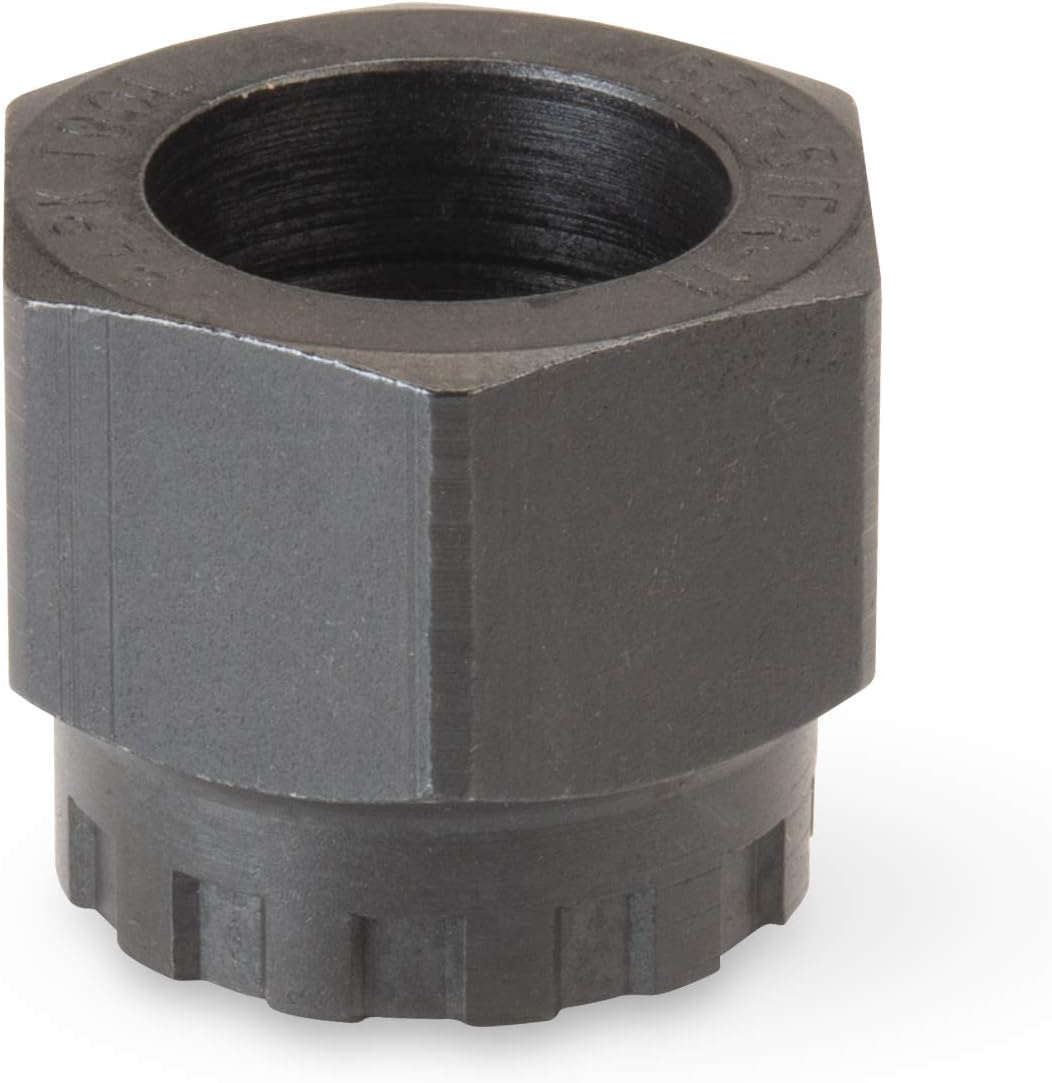
| EDITOR'S PICK[Park Tool Press Fit Removal Too…](https://www.amazon.com/dp/B000C12BMW?tag=greenflower20-20) | Mid-tier6-in-1 Bike Bottom Bracket Tool… | Budget pick[Park Tool BBT-5/FR-11 Bottom Br…](https://www.amazon.com/dp/B003RLJL6I?tag=greenflower20-20) | |
|---|---|---|---|
| Compatible BB | Press Fit internal bearings | External cups, lockrings, crank cap | Bottom bracket/cassette lockring |
| Notch type | — | 12/16-notch | — |
| Sizes covered | — | 39/41/44/46/49mm | — |
| Multi-tool | — | ✓ | — |
| Brand compatibility | — | Shimano, SRAM, FSA, Rotor, Chris King, Truvativ | — |
| Price | $62.95 | $29.99 | $9.95 |
| See on Amazon → | See on Amazon → | See on Amazon → |
Why There Are So Many Standards (And Why It Matters for Your Wallet)
The proliferation isn’t arbitrary — it tracks two separate engineering pressures that collided badly.
Weight and stiffness. Wider bottom bracket shells (the tube in the frame that holds the BB) allow larger-diameter spindles (the axle through the BB), which are stiffer under pedaling load without adding meaningful weight. Brands chased this aggressively from the early 2000s onward. As VeloNews’s comprehensive bottom bracket standards overview notes, the jump from traditional 68mm threaded shells to 86mm or 92mm press-fit shells was driven almost entirely by the stiffness-to-weight argument — not by any deficiency in thread reliability.
Manufacturing efficiency. A smooth, unthreaded shell is faster and cheaper to machine or mold than a precisely threaded one. This is why press-fit BBs proliferated on mid-to-high-end bikes between roughly 2008 and 2018 — they saved frame builders fractions of a millimeter in tolerance stack-up and saved a few grams. Cyclists largely paid the price in noise, creaking, and bearing longevity, particularly in aluminum frames where thermal expansion rates mismatch the plastic or aluminum BB cup inserts.
The result: if you service bikes across a range of years and brands, you need either a very large tool collection or a clear diagnostic process before you buy anything. Every bottom bracket swap has a hidden cost — the right tool, or discovering mid-job that you need one.
The Six Standards You’ll Actually Encounter
Think of BB standards in two families: threaded and press-fit. Within each family there are sub-variants that require specific tools. Here’s the practical breakdown.
Threaded Standards
BSA / English (68mm or 73mm shell width, 1.37” × 24 TPI) The oldest and still most common standard. The left cup is left-hand threaded (tightens counter-clockwise) — one of cycling’s enduring oddities, designed to prevent the cup from unthreading under pedaling forces. Park Tool’s bottom bracket standards resource identifies BSA as the dominant standard on road bikes up to approximately 2008–2010 and still common on steel, titanium, and many modern gravel frames. Compatible with Shimano Hollowtech II, SRAM GXP, and most external-bearing cranks via the appropriate cup set.
Tool needed: A splined BB tool (Park Tool BBT-9 or equivalent) for Shimano-style cups, or a pin-spanner for older square-taper cartridge BBs. A good torque wrench (20–50 Nm range) is non-negotiable — the left and right cups have different torque specs.
T47 (47mm ID, M47×1mm thread pitch) The thoughtful re-boot. T47 was introduced by Wolf Tooth Components and adopted by a growing roster of frame builders as a threaded standard wide enough to accept large-diameter spindles (30mm and up) while avoiding press-fit’s reliability issues. BikeRadar’s standards explainer notes T47 is increasingly common on premium steel, titanium, and custom frames from 2020 onward. Both internal and external-bearing versions exist — confirm which your frame uses before ordering cups.
Tool needed: T47-specific threaded cup tool (Park Tool BBT-49.2 or similar). Do not attempt this with BSA tools — the thread pitch is different and you will damage the shell.
Italian (70mm shell width, 36mm × 24 TPI, both cups right-hand threaded) Found primarily on older Colnago, Pinarello, and some De Rosa frames. Both cups tighten clockwise — the opposite of BSA convention on the left side. Mixing these up is a fast path to a destroyed frame. Sheldon Brown’s bottom bracket reference is the clearest source for confirming Italian threading specs by frame vintage.
Press-Fit Standards
Press-fit BBs are installed by pressing bearing cups directly into an unthreaded shell using a dedicated press tool. They come out (ideally) with a puller. The critical dimensions are shell inner diameter and shell width.
PF30 (46mm ID, 68mm or 73mm wide) Common on carbon road and cross bikes from Specialized, Cannondale, and others circa 2010–2018. Accepts 30mm spindle cranks natively. Known creaking issues in many frames led many riders to replace factory PF30 cups with threaded adapters (Wheels Manufacturing and Token make well-regarded versions).
BB86 / BB92 (41mm ID, 86mm or 92mm wide) Shimano’s press-fit standard, designed around their Hollowtech II 24mm spindle. The 86mm width is common on road frames; 92mm on mountain. Compatible with SRAM cranks via adapter cups. Shimano’s dealer manuals (available at si.shimano.com) specify precise press-fit tolerances — these matter more than most mechanics realize.
BB30 (42mm ID, 68mm or 73mm wide) Cannondale’s original large-diameter standard. Similar dimensions to PF30 but the shell is actually machined with a retaining ring groove — technically a hybrid. Accepts 30mm spindle cranks. Per BikeRadar’s analysis, BB30 frames respond well to threaded conversion inserts when the original bearings begin creaking.
SRAM DUB Press-Fit (various shell widths, 41mm ID) DUB (Durable Unified Bottom Bracket) is SRAM’s current spindle standard at 28.99mm diameter. Available in press-fit and threaded versions across essentially every shell width. Introduced in 2018; now standard across SRAM’s Eagle MTB and road groupsets. If you’re running SRAM Red AXS or Force AXS with a new carbon frame, there’s a high probability your bike runs DUB in a threaded or press-fit flavor.
By the Numbers
| Standard | Shell ID | Shell Width | Spindle Compatibility | Install Method |
|---|---|---|---|---|
| BSA/English | 34.8mm (threaded) | 68 / 73mm | 24mm, 30mm (w/ adapters) | Thread |
| T47 | 47mm (threaded) | 68 / 86mm | 24mm, 28.99mm, 30mm | Thread |
| PF30 | 46mm | 68 / 73mm | 30mm native | Press |
| BB86/BB92 | 41mm | 86 / 92mm | 24mm native | Press |
| BB30 | 42mm | 68 / 73mm | 30mm native | Press |
| SRAM DUB PF | 41mm | Various | 28.99mm native | Press |
Source: Park Tool bottom bracket standards reference and BikeRadar standards guide, current as of Q1 2026.
The Tool Decision: What to Actually Buy
This is where total cost of ownership thinking matters. A $15 pin-spanner works on exactly one standard and strips if you apply real torque. A $60 dedicated Shimano external cup tool works on a large portion of the market and lasts decades. A $200 press-fit installation and removal set opens the full press-fit ecosystem.
For a single-bike threaded setup: A quality splined cup tool (Park Tool BBT-9.2 is the reference standard, consistently rated highly across aggregated reviews) plus a torque wrench with the right range. Budget $40–80 for the tool pair. The torque wrench matters — Shimano specifies 35–50 Nm for Hollowtech II cups, and undertorqued cups creak within weeks.
For a workshop handling multiple bikes: The Park Tool BBT-39.2 set handles most threaded formats. Add a Wheels Manufacturing threaded conversion kit for press-fit frames that have been problematic — owners of PF30 Specialized and older Trek frames consistently report that converting to threaded significantly reduces creak callbacks.
For press-fit installation: The Park Tool BB-50.2 press handles BB86/92, PF30, and BB30 installations when combined with the appropriate adapters. The full adapter set runs approximately $150–200. The alternative — a threaded-rod homemade press — works in a pinch but risks cocking the cup during installation, which guarantees early bearing failure. For high-end carbon frames, the professional press is not optional.
For press-fit removal: A dedicated puller or the reverse function on the BB-50.2. Never hammer cups out from one side — you will crack the shell on a carbon frame, and repair costs will far exceed the price of a proper puller.
T47 specifically: If you’re building or servicing modern steel customs with T47 shells, add a T47-specific cup tool. Park Tool’s BBT-49.2 is the current reference; Wheels Manufacturing also makes a well-regarded version. Don’t skip this — BSA tools will cross-thread T47 shells.
Identifying What You Have: A Diagnostic Sequence
Before you order anything, run this sequence:
- Look at the shell. Is it smooth (press-fit) or threaded? Shine a light in and look for thread ridges.
- Measure the shell width. A caliper across the outside of the shell (subtract shell wall thickness for ID) or a quick measurement across installed cups tells you whether you’re in 68, 73, 86, or 92mm territory.
- Measure the shell inner diameter. 41mm = BB86 family or SRAM DUB PF. 42mm = BB30. 46mm = PF30. For threaded shells: 34.8mm effective ID = BSA. 47mm = T47.
- Identify your crankset spindle diameter. 24mm = Shimano Hollowtech II or SRAM GXP. 28.99mm = SRAM DUB. 30mm = older SRAM, Cannondale, FSA.
- Cross-reference with Park Tool’s bottom bracket standards chart (available at parktool.com) using frame brand, model year, and your measurements. When two data points conflict, trust the caliper over the spec sheet — frame tolerances drift between model years.
If X, Then Y: Your Decision Rules
If your frame has a threaded BSA shell and you’re running Shimano: Buy a splined cup tool and Shimano Hollowtech II cups. This is the most reliable, most serviceable setup in road cycling, and the tools work across the entire Shimano ecosystem indefinitely.
If your frame is a PF30 carbon road bike that creaks: The most cost-effective long-term fix is a threaded conversion insert (Wheels Manufacturing or Token) combined with a threaded external-bearing cup set. You spend ~$60–90 on the insert plus cups, and you eliminate the creak permanently. Factor this into your total cost versus repeated bearing replacement.
If you’re building or servicing T47 frames: Budget for the dedicated T47 tool from the start. Do not rationalize skipping it. A T47 frame shell costs hundreds to repair if cross-threaded.
If you manage a mixed fleet (road, gravel, MTB across multiple brands): The press tool investment pays off at roughly 4–5 press-fit BB services. Below that threshold, outsourcing press-fit work to a shop with the equipment is cheaper than the tool amortization. Above that threshold — or if you’re working on clients’ high-end carbon bikes — own the tool.
If you can’t identify the standard from the frame alone: Park Tool’s reference guide and Shimano’s dealer manuals at si.shimano.com are the most reliably maintained public databases for cross-referencing frame and component compatibility. When in doubt, measure first and order nothing until you have confirmed dimensions in hand.
The bottom bracket category rewards the mechanic who slows down to identify before acting. The cost of the wrong tool or the wrong BB is almost always higher than the ten minutes it takes to measure twice.