If you’ve ever snapped a carbon fiber seatpost clamp bolt — or watched someone else do it — you already understand why a torque driver matters. A torque driver is a small screwdriver-style tool that applies a precise, measured amount of rotational force (called torque, measured in Newton-meters, or Nm) to a bolt, then signals you to stop. On a modern bike, where carbon fiber parts, titanium bolts, and delicate stem clamps live in close proximity, “tight enough” is not a reliable standard. Too little torque and a stem faceplate slips under load; too much and you crack a steerer tube or strip an aluminum thread. A compact torque driver fills the gap between a standard multi-tool and a full-size click torque wrench — it handles the lower-torque fasteners (roughly 1–8 Nm) that appear constantly in modern bike assembly. This comparison breaks down three well-regarded options — the Park Tool ATD-1.2, the MARQUE torque driver, and the Lezyne Torque Drive — so you can choose the right one for your specific workflow.
| EDITOR'S PICKPark Tool ATD-1.2 - Adjustable… | Mid-tierLEZYNE Torque Drive Bike Multi-… | Budget pickMARQUE Adjustable Bike Torque W… | |
|---|---|---|---|
| Torque Range | — | — | 4–6 Nm |
| Included Bits | — | 11 bits | 3, 4, 5mm; T25 |
| Bit Retention | — | Magnetic | — |
| Material | — | Aluminum | — |
| Type | Adjustable | Multi-tool | Adjustable, Dial |
| Portable | — | Compact | Portable, Mini |
| Price | $79.95 | $59.99 | $38.99 |
| See on Amazon → | See on Amazon → | See on Amazon → |
What Each Tool Is Actually Built For
Before diving into the comparison, it’s worth establishing the use-case bracket. All three tools in this roundup are designed for low-to-medium torque applications: stem bolts, seatpost collars, derailleur limit screws, bottle cage mounts, handlebar clamp bolts, Di2 junction box screws, and similar fasteners. They are not pedal wrenches, bottom bracket tools, or cassette lockring drivers. This distinction matters more than most buyers realize — reaching for a compact torque driver on a pedal spindle is a calibration-wrecking mistake.
Head-to-Head Tool Breakdown
Park Tool ATD-1.2
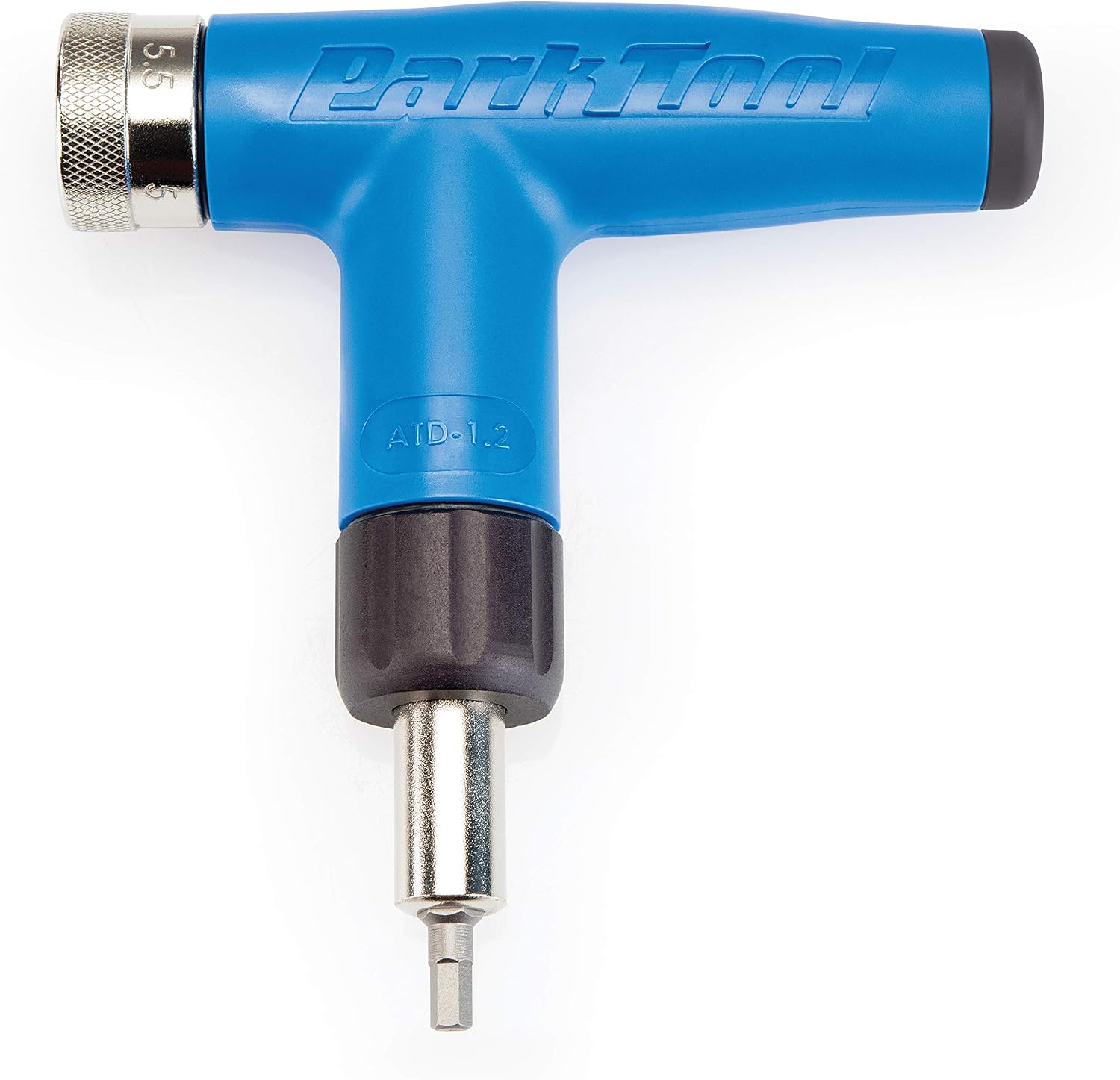
The ATD-1.2 is Park Tool’s adjustable torque driver — “adjustable” being the key word. Rather than clicking at a single preset torque, the ATD-1.2 lets you dial in a target value across its rated range using a numbered collar on the handle. Per the Park Tool ATD-1.2 product page and owner documentation published by Park Tool Company, the driver operates across a 2–10 Nm range. When the fastener reaches your set torque, the driver slips, preventing overtightening. Owners consistently describe it as the tool that lives on the workbench surface rather than in the drawer.
Park Tool’s published owner documentation is explicit that the ATD-1.2 is designed for hex bit work on standard bike fasteners and is not the right tool for pedals, bottom brackets, or any fastener requiring more than 10 Nm. The ATD-1.2’s design also allows for recalibration — a long-term ownership advantage over tools with no user-serviceable mechanism. BikeRadar’s Best Torque Wrench for Bikes buyer’s guide notes that professional mechanics typically verify torque tool accuracy at least annually, and that regular use accelerates calibration drift; the ATD-1.2’s serviceable internals make it the most sustainable option for high-frequency workshop use.
The practical implication of the adjustable collar: if your build involves multi-torque work — switching between a 4 Nm stem bolt and a 6 Nm seatpost clamp in the same session — you’re turning a dial rather than reaching for two preset tools. For anyone maintaining more than one bike regularly, that workflow advantage compounds quickly.
Park
$79.95
In stock on Amazon
Check price on AmazonMARQUE Torque Driver
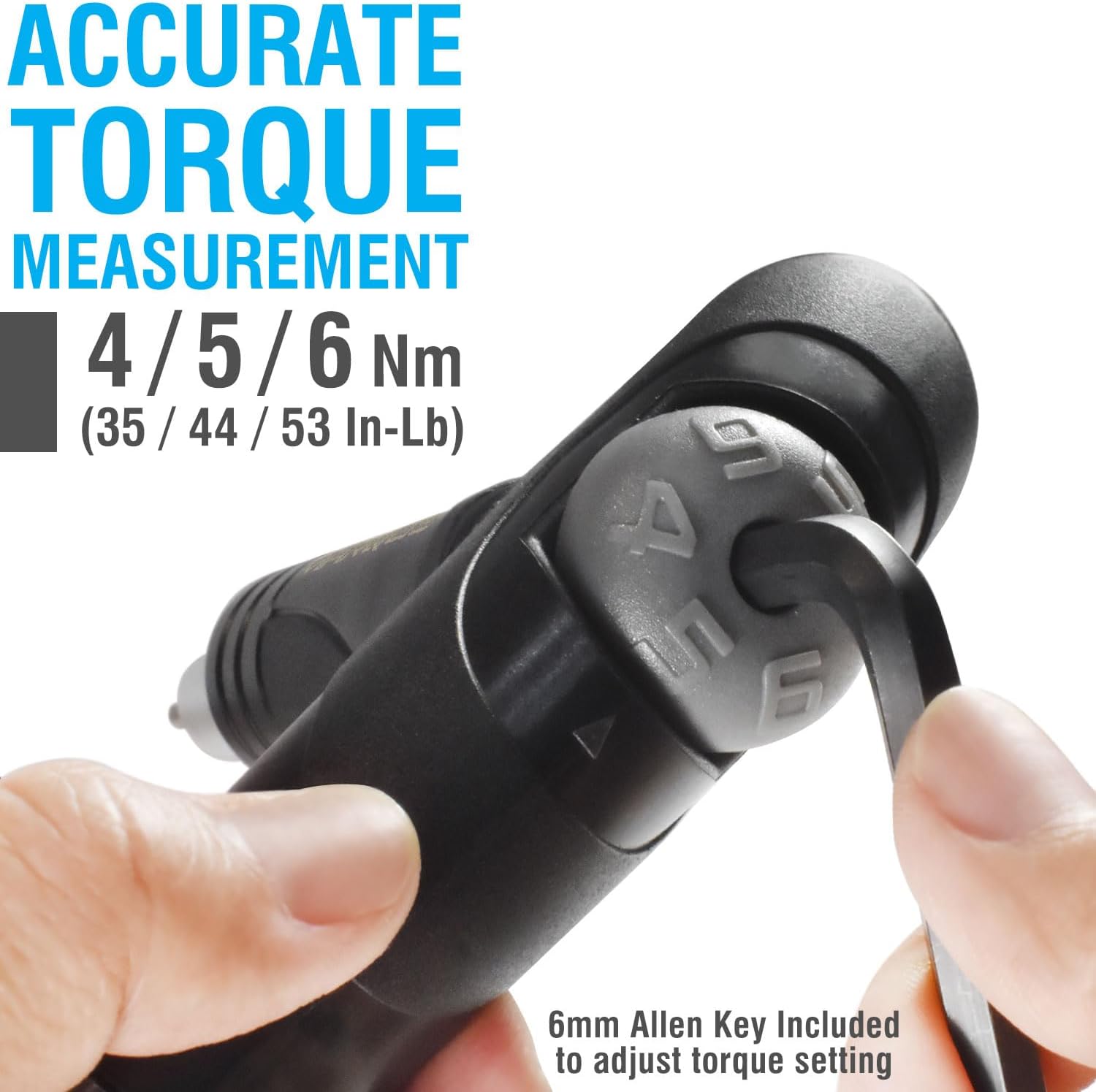
The MARQUE enters the conversation with a different first impression. Multiple owners, across aggregated review patterns, describe nearly returning it before first use — the fit and finish triggered skepticism. Then they used it, found it accurate and reliable, and kept it. That arc is worth taking seriously: it suggests the tool’s value is in its calibration and function, not its premium unboxing experience. For buyers who evaluate tools by feel-in-hand before committing, the MARQUE requires a brief adjustment period.
What keeps owners is the accuracy on carbon-safe fasteners and an honest price-to-performance ratio. If you are torquing carbon components to manufacturer spec and want a tool that does the job without the Park Tool premium, the MARQUE is worth a close look.
One practical note from aggregated owner feedback: the included bit set does not cover every fastener you will encounter across a full drivetrain service. Plan to supplement with T25 Torx, T30, and additional hex sizes depending on your component mix. Shimano publishes specific torque values and fastener profiles for all current groupsets through the Shimano Technical Documents portal at si.shimano.com — checking those documents before your first build session will identify your bit gaps before you discover them mid-task.
LEZYNE
$59.99
In stock on Amazon
Check price on AmazonLezyne Torque Drive
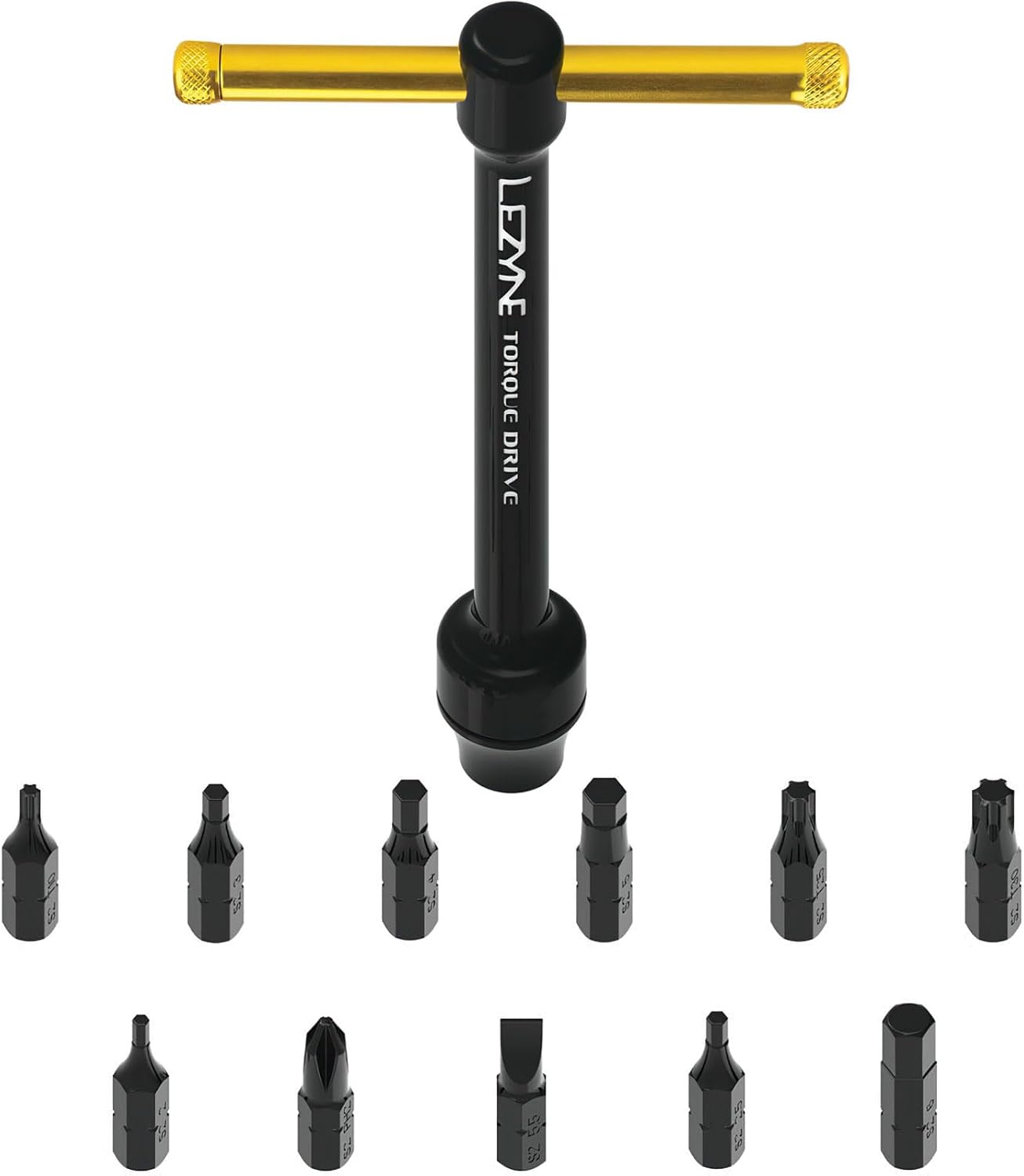
The Lezyne Torque Drive is a preset-style driver — it comes configured for a specific torque value and signals at that point. That is a meaningful design difference from the ATD-1.2. The tradeoff is simplicity and consistency versus flexibility. You always know what torque you are applying; there is no collar to misread or accidentally bump between jobs.
The recurring feedback pattern from Lezyne owners centers on the scale markings — the lines are fine and close together, and more than one reviewer has noted readability difficulty in lower light conditions. In bright shop lighting this is a minor inconvenience; in a dim garage or van build, it is something to plan around with supplemental task lighting.
The more actionable owner insight: Lezyne reviewers consistently emphasize storing the Torque Drive separately from loosening tools, and using it only for final torque application — not for running fasteners down from scratch. Using any torque driver to loosen fasteners applies reverse stress to the internal mechanism, which is calibrated for forward-direction loading only. Over time this throws off accuracy. Run fasteners down with a standard hex driver; use the torque driver only for the final, spec-confirming turn.
MARQUE
$38.99
In stock on Amazon
Check price on AmazonComparison at a Glance
The table below maps the three tools across the factors that matter most to working cyclists.
| Factor | Park Tool ATD-1.2 | MARQUE | Lezyne Torque Drive |
|---|---|---|---|
| Torque range | 2–10 Nm (adjustable) | Varies by model | Fixed preset(s) |
| Adjustability | Yes — dial collar | Yes | No |
| First-impression quality | High | Moderate | High |
| Carbon component confidence | High (with correct setting) | High (once verified) | High (preset eliminates guesswork) |
| Bit set completeness | Good starting point | Supplementation expected | Supplementation expected |
| Recalibratable | Yes | No user mechanism | No user mechanism |
| Best-fit user | Multi-torque workflows | Value-focused builder | Single-spec simplicity |
Park
$79.95
In stock on Amazon
Check price on AmazonLEZYNE
$59.99
In stock on Amazon
Check price on AmazonMARQUE
$38.99
In stock on Amazon
Check price on AmazonMost carbon component manufacturers — including Shimano and SRAM — publish stem bolt torques in the 4–6 Nm range and seatpost clamp torques in the 3–8 Nm range in their respective service documentation. All three tools cover the core use case comfortably if used within their rated ranges and applied only to tightening operations.
The Hidden Cost Layer You Should Account For
Total cost of ownership on torque drivers is easy to underestimate because the headline price is relatively modest. The real spend surfaces in two places.
Bit supplementation. Owner feedback across MARQUE and Lezyne ownership consistently confirms that the included bit sets are starting points, not complete workshop solutions. If you are working on SRAM Eagle with T25 interface bolts, or Campagnolo with proprietary hex profiles, you will be sourcing additional bits. Quality bits from Wera or Wiha run approximately $3–8 per bit; a complete supplemental set can add $25–50 to your total outlay. SRAM publishes service manuals — including fastener profiles and torque specifications — through the technical documentation section of sram.com. Shimano’s equivalent resource is the Shimano Technical Documents portal at si.shimano.com. Check both before purchasing supplemental bits so you are solving your actual gaps rather than guessing.
Calibration drift. This is the less-discussed long-game cost. Torque drivers are precision instruments. BikeRadar’s Best Torque Wrench for Bikes buyer’s guide notes that professional mechanics typically verify torque tool accuracy at least annually, and that regular use accelerates drift. A tool reading inaccurately by 10–15% is not protecting your carbon components — it is providing false confidence. Park Tool’s published owner documentation for the ATD-1.2 recommends checking adjustable drivers periodically and describes the recalibration procedure. Neither the MARQUE nor the Lezyne Torque Drive offers a comparable user-serviceable recalibration path, which is a meaningful long-term distinction for anyone building or servicing bikes frequently.
The Decision Rule
If you are building or maintaining multiple high-end bikes — a road bike, a gravel rig, a custom steel frame, rotating through different torque specs across the same session — choose the Park Tool ATD-1.2. The adjustable collar pays for itself in workflow time. Park Tool’s documentation and serviceability support justify the premium for anyone treating this as a professional-grade tool.
If you are price-sensitive and primarily working on your own bikes with carbon components where accuracy matters but constant torque range switching is not part of your workflow, the MARQUE is the defensible choice — once you override the first-impression skepticism and verify its calibration on a known fastener. Its owner trajectory (near-return, then convert) is a pattern consistent enough to trust.
If you want maximum simplicity — a single-torque application driver that removes the possibility of collar misreading or human error — the Lezyne Torque Drive works well for final-stage torquing on fasteners within its preset range. Pair it with a standard hex driver for running fasteners down, store it intentionally away from your loosening tools, and supplement the bit kit before your first use.
Frequently Asked Questions
Can I use a fixed-preset torque driver for all my bike bolts?
No — and this is where buyers run into trouble. A fixed-preset driver is accurate only at its rated torque value. If your stem needs 5 Nm and your seatpost clamp needs 8 Nm, a single-preset tool can correctly service only one of those. You either need an adjustable driver like the ATD-1.2, multiple preset tools, or a full-size adjustable click torque wrench for the higher-torque range.
What is the difference between the ATD-1.2 and a standard click torque wrench?
A click torque wrench — the longer, bar-style tool common in workshops — covers a much wider torque range (typically 5–60 Nm or higher) and signals with an audible click. The ATD-1.2 is screwdriver-format, covers 2–10 Nm per Park Tool’s published product documentation, and signals by slipping rather than clicking. For low-torque bike bolts, the ATD-1.2’s compact format and slip mechanism are practical advantages; for pedals, bottom brackets, or crank bolts, a full-size wrench is the correct tool.
Is the MARQUE accurate enough for carbon fiber components?
Based on aggregated owner reports, yes — the pattern of owners who nearly returned it and then found it reliable is consistent enough to be informative. That said, if you are torquing an expensive carbon cockpit or seatpost to the minimum manufacturer spec, verify the MARQUE against a known reference — another calibrated tool or a professional mechanic’s check — before trusting it blindly. This is sound practice with any new torque tool, regardless of brand.
Should I carry a torque driver on rides?
Home or workshop use only, in almost every realistic scenario. These tools are calibration instruments, not trail-side convenience devices. Vibration, impact, and temperature swings degrade calibration. If you need mid-ride adjustment capability, a quality multi-tool handles mechanical loosening; re-torque to spec when you are back at the bench.
Why should I never use a torque driver to loosen bolts?
Torque drivers are designed to apply force in one direction — tightening — to a specified limit. Using them to loosen fasteners applies reverse stress to the internal slip or click mechanism, which is calibrated for forward-direction loading only. Over time, this throws off accuracy. Multiple Lezyne Torque Drive owners flag this explicitly in their feedback. Run fasteners down with a standard driver; use the torque driver only for the final, spec-confirming turn.
What bit sizes do I need beyond what is included in these kits?
The most commonly missing bits based on owner feedback across MARQUE and Lezyne ownership: T25 Torx (SRAM drivetrain interface bolts, some brake mounts), T30 Torx (some crankarm and rotor bolts), 3 mm hex (cable anchor bolts, Di2 junction screws), and T10 Torx (some Shimano Di2 components). Check your specific component manufacturer’s service documentation — Shimano via the Shimano Technical Documents portal at si.shimano.com, and SRAM via the technical documentation section of sram.com — before purchasing supplemental bits, so you are solving your actual gaps rather than guessing.