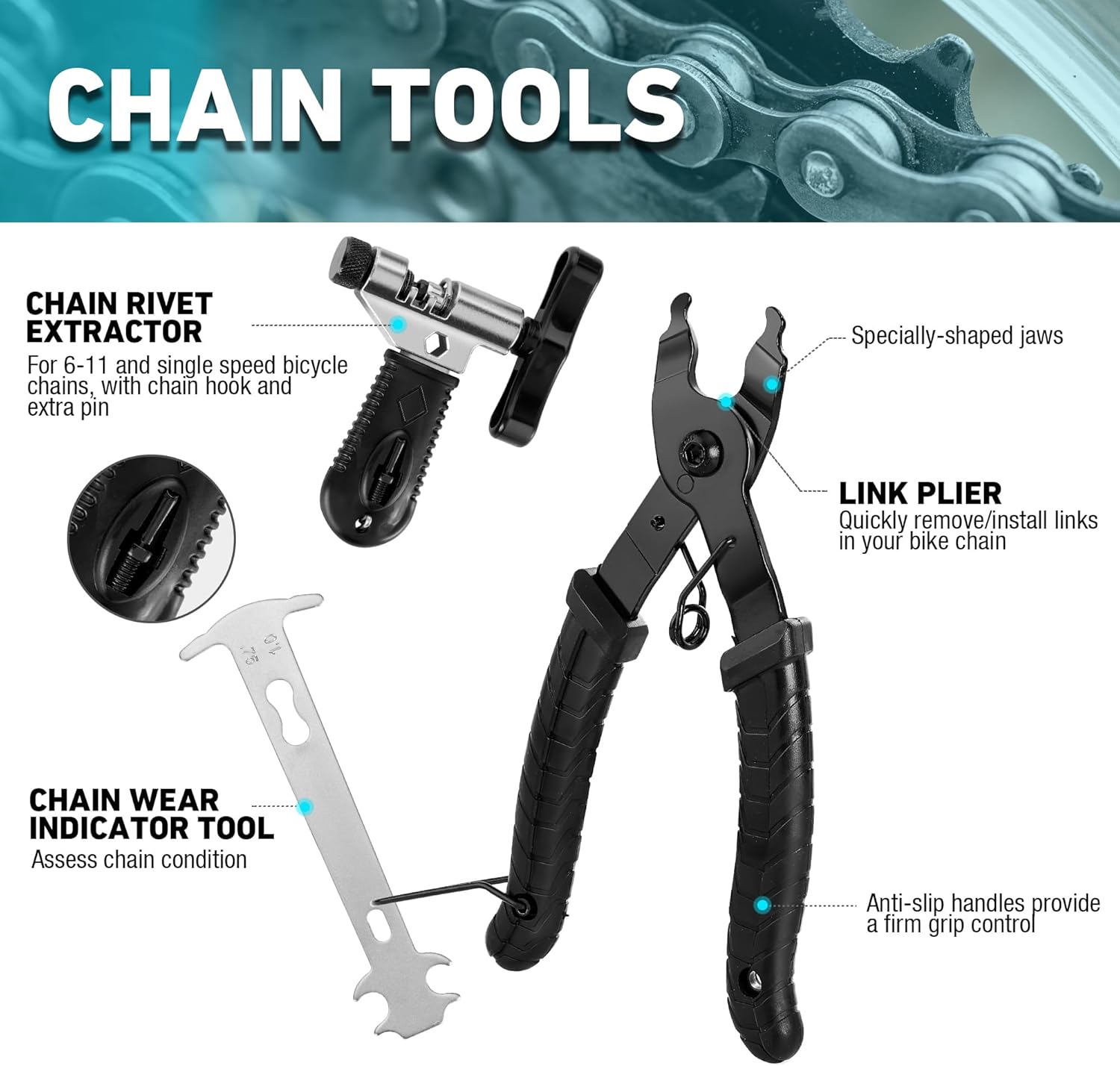
If you’ve ever bought a “complete” 40-piece bike tool kit from a big-box retailer and found yourself, six months later, reaching for a proper hex key set you purchased separately, you’ve already learned the expensive lesson this article is designed to prevent. A bike tool kit is simply a bundled collection of the hand tools and specialty instruments needed to maintain and repair a bicycle — things like hex wrenches (also called Allen keys, used for virtually every bolt on a modern bike), chain tools (which push out the tiny rivets that connect chain links), and cassette lockring tools (which remove the cog cluster on your rear wheel). What separates a smart kit purchase from a money pit is understanding which tools solve real problems on the bikes you actually own, and which ones exist to inflate a product photo.
This guide is written for the rider who already knows what a bottom bracket shell is and has bled a brake line at least once — but who is now trying to decide whether to drop $150 on a branded kit, build à la carte, or upgrade specific pieces from a starter collection. We’ll walk through three tiers of approach, name the tradeoffs directly, show the cost math, and end with a clear decision framework organized around your actual drivetrain.
The Core Problem: Most “Complete” Kits Aren’t Complete for Your Bike
The phrase “complete bike tool kit” is a marketing label, not a technical specification. Bicycling’s buying guide coverage notes that boxed kits almost universally include a cable cutter, cone wrenches (used for cup-and-cone style loose-ball hubs), and several spoke wrenches — tools that a rider running sealed-bearing hubs and hydraulic brakes may genuinely never use. Meanwhile, the same kit often omits a T25 Torx driver (essential for SRAM rear derailleurs and many rotor bolts) or a proper chain checker (a gauge that measures chain wear to prevent cassette damage before it becomes a costly replacement).
The core issue is that kit manufacturers design to a price point and a generalized bike type — typically a mid-range mechanical groupset on an aluminum frame. If your workshop services a Shimano Dura-Ace Di2 build, a SRAM Eagle AXS drivetrain, or a Campagnolo Super Record setup, the kit’s “drivetrain tools” section will likely leave you short in the exact moments you need coverage.
Park Tool’s repair help documentation frames this clearly: the right starting question isn’t “how many pieces is the kit?” but “what component systems does this workshop actually service?” That shift in framing changes every purchase decision downstream.
Three Tiers: Budget, Mid-Range, and Premium Compared
Understanding where each tier wins and where it falls short is the fastest way to match your budget to your actual needs. The comparisons below are organized by tier, with a summary marker at the end of each section.
Budget Kits ($40–$70): High Piece Count, Low Useful-Tool Ratio
Budget big-box kits typically ship 32 to 45 pieces and price each tool at roughly $4–$6 per item. On paper, that sounds like strong value. In practice, BikeRadar’s home workshop coverage consistently identifies only 10 to 14 tools in these kits as reliably useful on a modern groupset drivetrain — meaning you’re paying for 20 or more pieces that will sit untouched in the bag.
The specific failure points are predictable. Hex keys in budget kits are frequently made from low-grade steel that rounds off under torque before the bolt moves. Chain tools at this tier often distort the pin during installation, producing a stiff link that skips under load within a few rides. Spoke wrenches are frequently cut slightly oversized, which means they round off spoke nipple flats instead of turning them — converting a $5 truing task into a shop visit. Cable cutters in budget kits are typically repurposed wire cutters that crush housing ends rather than shearing them cleanly, introducing friction spikes into shifting and braking.
The honest assessment: a budget kit can serve as a stopgap or a way to cover minor adjustments, but it is a poor foundation for anyone servicing a bike with carbon components, modern electronic groupsets, or a drivetrain they care about preserving.
Professional
$15.99
In stock on Amazon
Check price on AmazonMid-Range Kits ($120–$200): The Most Defensible Starting Point for Most Riders
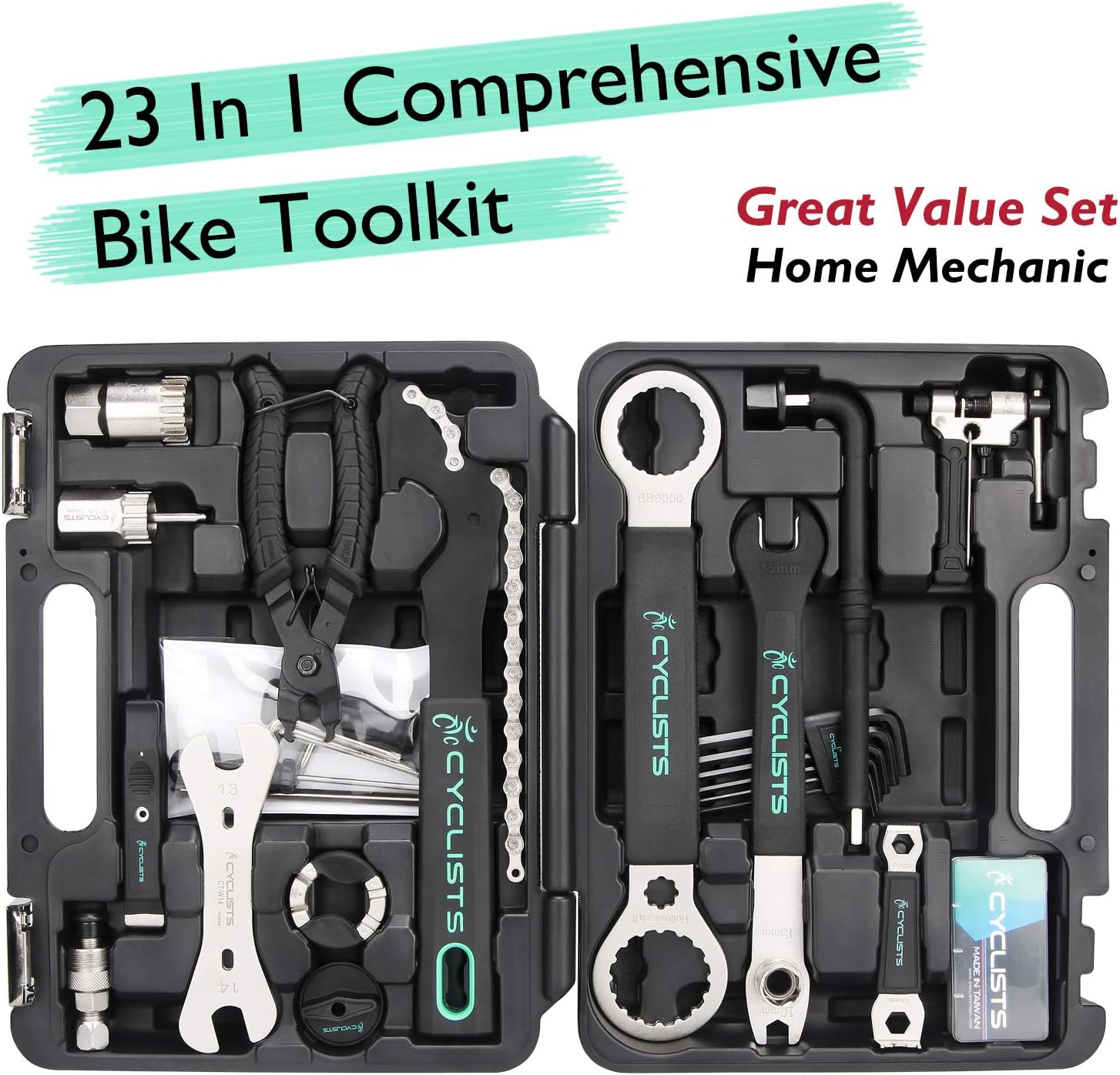
Mid-range branded kits from manufacturers like Pedro’s, Feedback Sports, and Park Tool’s home mechanic series typically ship 25 to 35 pieces and land closer to $7–$10 per useful tool. More importantly, tool steel quality at this tier is meaningfully better: hex keys hold torque, chain tools drive pins cleanly, and cable cutters shear housing without crushing it.
Bicycling’s tool kit coverage and BikeRadar’s home workshop guides both point to mid-range kits as the practical sweet spot for riders maintaining one or two bikes with standard groupsets. The math supports this: a mid-range kit supplemented by a dedicated torque wrench and a chain checker — two tools almost universally omitted from boxed kits — covers the overwhelming majority of home workshop tasks for a Shimano or SRAM mechanical drivetrain.
The meaningful gap at this tier is drivetrain specificity. A mid-range kit designed around a generalized bike type will still omit a T25 Torx driver for SRAM derailleurs and rotor bolts, and will rarely include a press-fit bottom bracket tool. Budget for two to four individual purchases on top of the kit to close those gaps for your specific groupset.
EPAuto
$34.97
In stock on Amazon
Check price on AmazonPremium and Professional Kits ($250–$450+): Justified by Volume and Longevity
Park Tool’s professional mechanic roll-up kits, reviewed favorably by Velonews for build quality and organized layout, represent the premium tier. At 20 to 30 pieces, piece count is lower than budget kits, but useful-tool ratios run 90% or better — nearly every item in the kit earns its place in a working workshop. Cost per useful tool runs $12–$18, which sounds expensive until you factor in tool lifespan: professional-grade tools from Park Tool or Wera are routinely documented in mechanic forums as lasting 10 to 20 years of heavy use without replacement.
The premium tier justifies its price under two conditions: you are maintaining four or more bikes per year, or you are running a small shop where tool failure has a direct cost in lost service time and customer trust. For a single-bike household serviced on weekends, the premium kit represents more capability than you are likely to use regularly. Sheldon Brown’s workshop tool reference makes a useful observation in this context: the quality of the tool matters most at the interfaces where precision is irreplaceable — torque-sensitive carbon clamp zones, cassette lockring engagement, and chain pin installation. Those specific tools are worth buying at premium quality even in an otherwise mid-range kit.
23
$74.78
In stock on Amazon
Check price on AmazonThe Non-Negotiables: Tools That Earn Their Place Every Time
These instruments appear in nearly every repair session. If a kit doesn’t include quality versions of these, piece count is irrelevant.
Hex key set with long-arm T-handles (2–10mm). Nearly every bolt on a modern bicycle takes a hex key. Velonews’ workshop coverage consistently emphasizes the long-arm T-handle format over fold-out multi-tools for bench use: the longer lever arm reduces stripped bolt heads and provides more tactile torque feedback. Wera’s 950/9 set and Park Tool’s AWS series appear repeatedly across BikeRadar and Bicycling coverage as home-workshop standards.
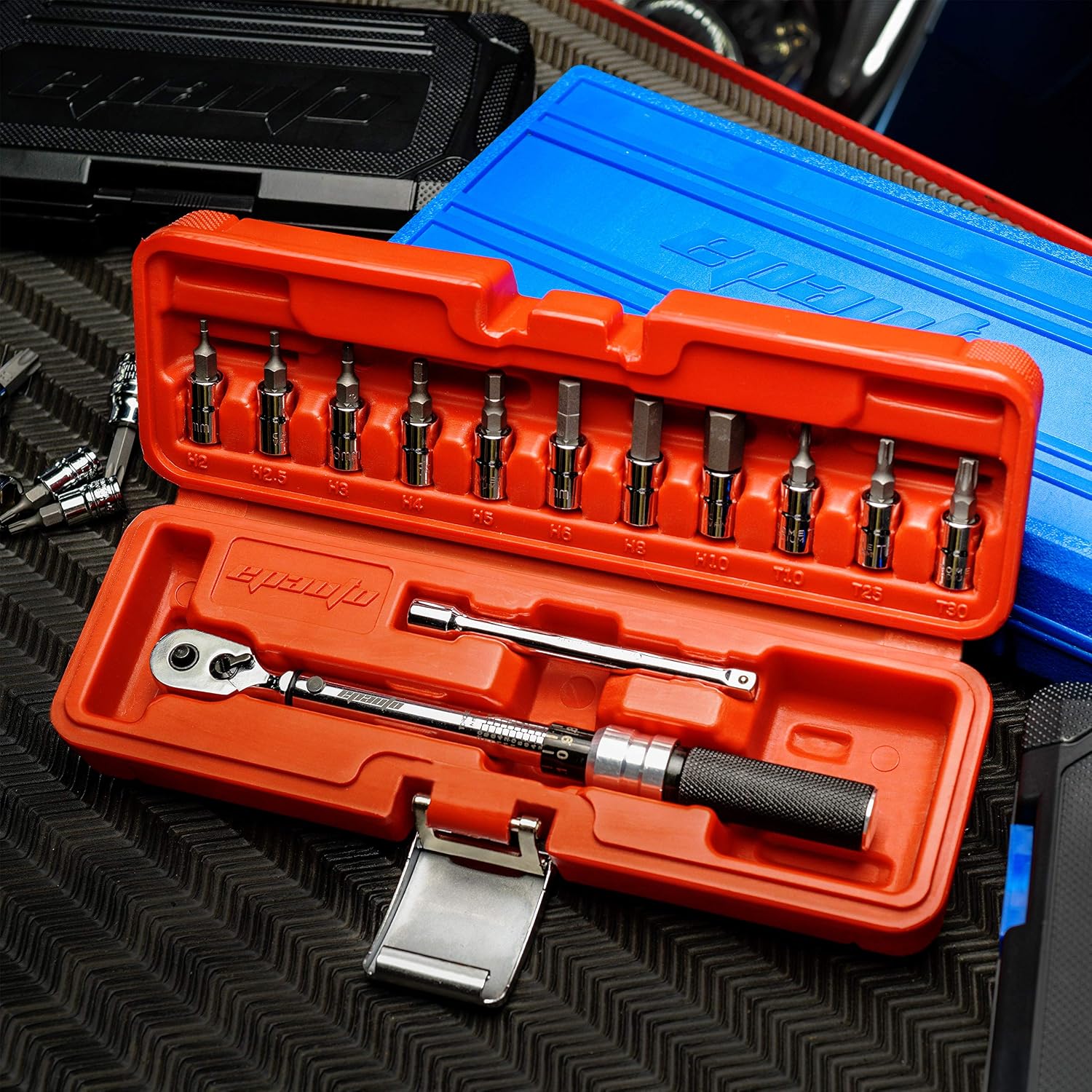
Torque wrench rated for 2–25 Nm. Carbon fiber frames and components — now commonplace even at the $1,500 frame level — have torque-sensitive clamping zones. Shimano’s technical documentation, available via si.shimano.com, specifies stem bolt torque at 6–8 Nm for most carbon steerers; exceeding that voids warranty and risks catastrophic failure. Budget torque wrenches frequently drift after 50–100 uses. Wera and Pedro’s click-style torque wrenches are consistently noted in BikeRadar workshop coverage as maintaining calibration accuracy longer than budget alternatives. This is one tool where buying once at the $150–$250 tier pays for itself in avoided carbon damage.
Chain checker. A $15–$25 tool that measures whether your chain has stretched past the 0.5% or 0.75% wear threshold (different chainring materials tolerate different limits). Replace the chain at 0.5% and you protect a $200–$400 cassette. Skip it, and a worn chain accelerates cassette wear, turning a $20 chain swap into a $400–$600 drivetrain overhaul. Park Tool’s CC-4 and CC-3.2 are the most frequently cited gauges across home mechanic coverage at BikeRadar and Bicycling.
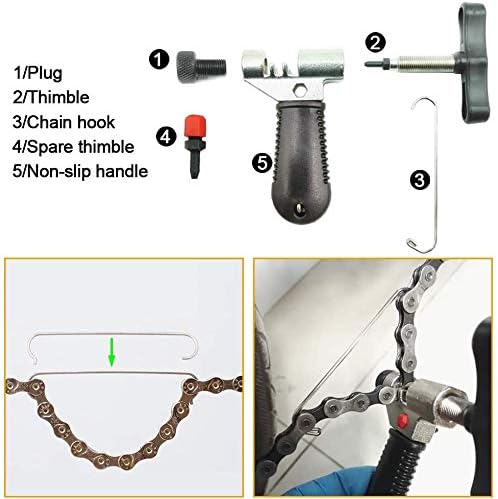
Chain tool. For breaking and rejoining a chain during installation or repair. Park Tool’s CT-5 and the Shimano TL-CN10 are consistently rated reliable for road and gravel chains. Note that SRAM Eagle chains use a PowerLock master link and do not use a traditional pin — your chain tool selection should reflect which system you run.
Cassette lockring tool and chain whip. These two always work together to remove the rear cassette. Sheldon Brown’s workshop reference notes this pairing is one of the most commonly improvised — and most commonly failed — DIY solutions in home workshops. Buy matched, properly sized tools.
Cable cutters. Bicycle-specific cable cutters are precision-ground to shear both inner wire and outer housing cleanly without fraying. Frayed housing ends create friction spikes in shifting and braking. Pedro’s and Park Tool both produce well-reviewed options in the $25–$45 range.
The Filler: What Inflates Piece Count Without Adding Value
Cone wrenches (for sealed-bearing bikes). If your hubs run cartridge bearings — Hope Technology, Chris King, DT Swiss, or most modern road hubs — cone wrenches address a hub architecture you don’t have. Including four cone wrench sizes in a kit aimed at modern builds is pure padding.
Generic bottom bracket tools of ambiguous standard. The bottom bracket has splintered into over a dozen competing standards: BSA threaded, Pressfit 30, T47, BB86, BB92, and more. A kit that includes “a bottom bracket tool” without specifying the standard likely ships a BSA cup tool useful on perhaps 40% of current bikes. Budget kits rarely include the Shimano TL-FC36 or press-fit alternatives needed for modern road builds.
Low-quality spoke wrenches. A cheap spoke wrench that doesn’t precisely fit your nipple size rounds off the flats, turning a minor wheel truing task into a shop visit. If you true wheels regularly, buy a wrench sized exactly to your nipple gauge (0.127”, 0.130”, or 0.136” are the common sizes). If you don’t true wheels regularly, the spoke wrenches in a budget kit are ballast.
Building Around Your Actual Drivetrain
SRAM (any AXS or mechanical groupset): Prioritize a T25 Torx driver and SRAM-compatible PowerLock pliers. Most boxed kits omit both. Purchase these separately even if you use a mid-range kit as your foundation.
Shimano Di2 or mechanical Dura-Ace / Ultegra: Shimano’s technical documentation at si.shimano.com specifies torque for Di2 wire port screws at 0.8–1.5 Nm. Budget torque wrenches rarely reach accurately into this sub-2 Nm zone. Verify your torque wrench covers this range before assuming coverage.
Campagnolo (Super Record, Chorus, Potenza): Campagnolo’s component ecosystem uses proprietary interfaces at several points — cassette body, bottom bracket threading on some frames, and rear derailleur B-gap adjustment. Riders consistently report that Campagnolo’s own bottom bracket tool (CT-BO001) is the only reliable solution for their crankset removal; third-party alternatives frequently strip. Budget for Campagnolo-specific tools separately from any boxed kit.
Multiple bikes or small shop: The à la carte math tips in your favor above roughly four bike-years of annual maintenance volume. A quality bench-top truing stand — Park Tool’s TS-2.2 is the most frequently cited professional-grade option in BikeRadar and Velonews coverage — and a proper workstand justify the investment when tool durability is multiplied across many service cycles.
Weekend commuter, one bike: A mid-range branded kit around the $150 mark, supplemented by a dedicated torque wrench and a chain checker, covers the overwhelming majority of what you’ll actually do. Don’t chase completeness on paper — chase coverage for your specific groupset.
The honest summary: the best complete bike tool kit is usually not a boxed “complete” kit at all. It’s a curated mid-range foundation — Pedro’s, Feedback Sports, or Park Tool’s home mechanic series — with three to five targeted additions that match your drivetrain. That approach typically lands between $250 and $400 all-in, delivers meaningfully higher per-tool quality than anything in the $70 big-box tier, and avoids the $600-plus sticker of professional kit sets that include tools you may not need for years. Build for what you wrench today, with room to add as your component mix evolves.