A torque wrench is simply a tool that lets you tighten a bolt to a specific amount of force — measured in Newton-meters (Nm) — instead of guessing by feel. On a modern bicycle, that precision matters enormously. Carbon fiber handlebars, titanium stem bolts, and lightweight seatpost clamps all carry manufacturer torque limits (usually printed right on the component), and exceeding them can crack or crush parts that cost hundreds of dollars to replace. There are two main flavors of torque wrench you’ll encounter: click-type, which makes an audible click when you hit your target, and digital, which shows your live force reading on a small screen and typically beeps or flashes an LED at the set point. Both work. The decision between them isn’t really about quality — it’s about how you process feedback under workshop pressure. This article maps out that decision clearly.
The Core Difference: How Each Type Communicates With You
A click wrench works mechanically. Inside the handle is a calibrated spring and a slip clutch. When the bolt reaches your set torque, the mechanism releases with a tactile “click” you feel in your hand and hear with your ears. There is no screen, no battery, and no software. The Park Tool Company’s Torque Wrench Use and Care Guide describes proper click-wrench technique as requiring the user to stop immediately at the click — continuing to apply force after the signal defeats the mechanism’s accuracy entirely.
A digital wrench replaces that mechanical clutch with a strain-gauge sensor — essentially a tiny electronic scale built into the drive head. It reads torque in real time, displays the number on an LCD, and alerts you when you reach the programmed target via buzzer, LED, or both. The feedback is cumulative and visible, not a single binary event.
This distinction is where real-world user experiences diverge sharply. Riders who describe themselves as anxious about mechanical feedback — or who have second-guessed themselves repeatedly using click-type wrenches — consistently report that a digital display with both a buzzer and an LED largely eliminates the uncertainty. The fear with click wrenches — “did I actually hear it, or did I imagine it?” — dissolves when you can watch the number climb and see it flash at your target Nm. That’s not a marketing angle. It’s a genuine cognitive-load difference that should drive your decision.
Where Click Wrenches Still Win
Click wrenches have a decades-long manufacturing track record. At mid-range torques — think 10–25 Nm for crankarm bolts, bottom bracket cups, and cassette lockrings — they are fast, reliable, and require no cognitive overhead beyond listening. You set the collar, tighten, click, stop. BikeRadar’s best torque wrenches buyers guide notes that quality click wrenches in the $80–$200 range cover virtually every drivetrain and wheel bearing application a cyclist will encounter.
The signal quality question gets interesting at the low end of the torque range. At 5 Nm — a setting directly relevant to carbon fiber bolt work — click mechanisms on inexpensive wrenches become less consistent. This is a factual result of click-wrench physics: a lighter spring release produces a lighter, harder-to-detect click. If your carbon work is concentrated below 6 Nm, wrench quality matters more than wrench type. A well-built click wrench from a reputable brand rated for that low range will signal cleanly at 5 Nm; a budget unit often will not.
One honest caveat for click wrench owners: the Sheldon Brown bicycle repair reference archive notes that all torque wrenches — regardless of type — should be professionally recalibrated periodically if used frequently in a shop environment. Click wrenches drift mechanically through spring fatigue; digital wrenches drift electronically through sensor offset. Neither type is exempt from this maintenance requirement. The Park Tool Company’s Torque Wrench Use and Care Guide specifically recommends winding the torque setting down toward the minimum before storage — leaving a click wrench under spring tension for extended periods can cause the spring to take a set, shifting calibration downward over time.
One more physical characteristic worth setting expectations on: the click sound on any click-type wrench is noticeably quieter at lower torque settings than at mid-range. This is physics, not a manufacturing defect. If you work in a noisy garage or shop environment, this is worth factoring into your choice.
Where Digital Wrenches Earn Their Price Premium
The clearest case for digital is the mixed-material, multi-fastener job: a full cockpit setup on a carbon road bike where you’re moving between a 4 Nm stem faceplate bolt, a 6 Nm stem clamp, and a 10 Nm headset top cap, all in sequence. Resetting a click wrench’s collar between each bolt takes time, introduces collar misread risk, and demands sustained attention to a numbered scale. A digital wrench lets you change targets in seconds via buttons, displays the current setting prominently, and alerts you with two independent channels — sound and light — when you arrive at the programmed torque.
That dual-feedback point matters in practice. A known failure mode on lower-quality digital models is that one of the two feedback channels is unreliable: the LED may be too dim to see in daylight, or the buzzer too quiet to register during normal workshop noise. Before purchasing any digital torque wrench, verify in owner reviews that both the LED and the buzzer are reliably perceptible at your target Nm range, not just at high torques where the sensor has more signal to work with. BikeRadar’s buyers guide for torque wrenches identifies this as a key quality differentiator between budget and professional digital models.
Comparing Your Options by Budget Tier
The following three subsections organize the click-versus-digital decision by investment level. The right answer at each tier is different, and understanding why helps you avoid overpaying for features you won’t use — or underspending in a way that costs you a carbon component.
Budget Range: Entry Tools for Occasional Home Mechanics
At the entry level (roughly $30–$60), you are choosing between inexpensive click wrenches and very basic digital models. For this tier, a click wrench is the safer choice. Entry-level digital torque wrenches often have single-channel feedback (buzzer only, or LED only), sensor accuracy closer to ±4–5%, and no calibration verification mode. An entry click wrench from a recognizable brand — even at this price — delivers a more consistent result for the typical home mechanic doing seasonal maintenance on aluminum-component bikes.
What to avoid at this tier: any digital wrench that does not specify its accuracy rating in the product documentation. Accuracy specs below ±3% at this price point are generally marketing claims rather than verified performance.
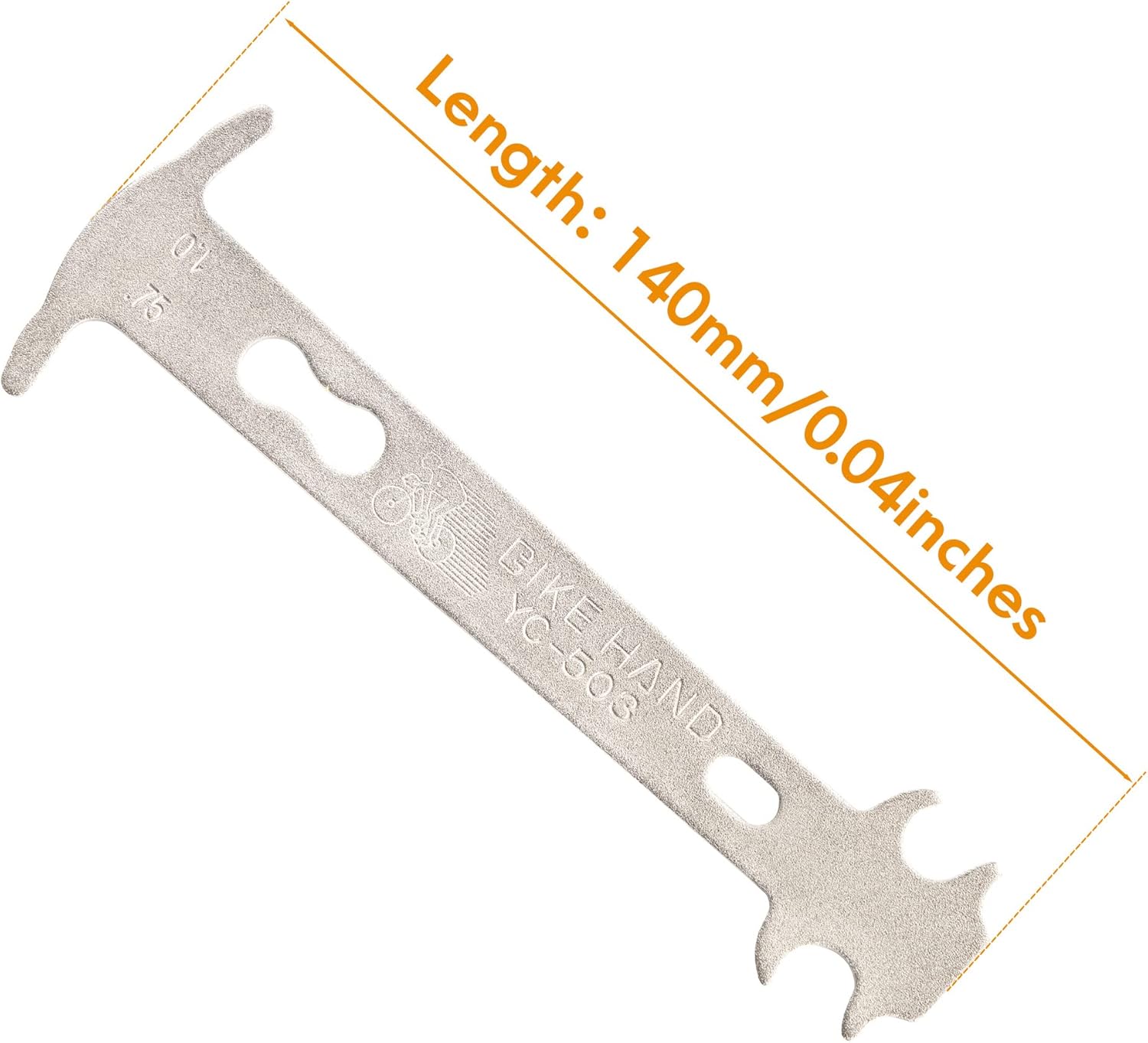
BikeHand
$8.99
In stock on Amazon
Check price on AmazonMid-Range: The Right Tool for Most Dedicated Cyclists
The $80–$180 range is where both click and digital wrenches become genuinely reliable for carbon bicycle work. This is the tier addressed most thoroughly in BikeRadar’s best torque wrenches buyers guide and in Velonews workshop tool roundups. Quality click wrenches at this level — the Wera Click-Torque series and the Pedro’s Demi-Torque are regularly cited by Velonews workshop coverage as setting the standard — deliver consistent, audible signals down to 5 Nm and carry accuracy ratings of ±3–4% clockwise.
Mid-range digital options, such as the Park Tool TW-6.2 (documented in the Park Tool Company’s product and repair-help library), offer ±2% accuracy, dual-channel feedback (both buzzer and LED), and straightforward target-setting interfaces. At this tier, the decision truly comes down to the cognitive-load question raised in the opening section: if you trust mechanical feedback, buy the click wrench; if you work better with a visible number, buy the digital.
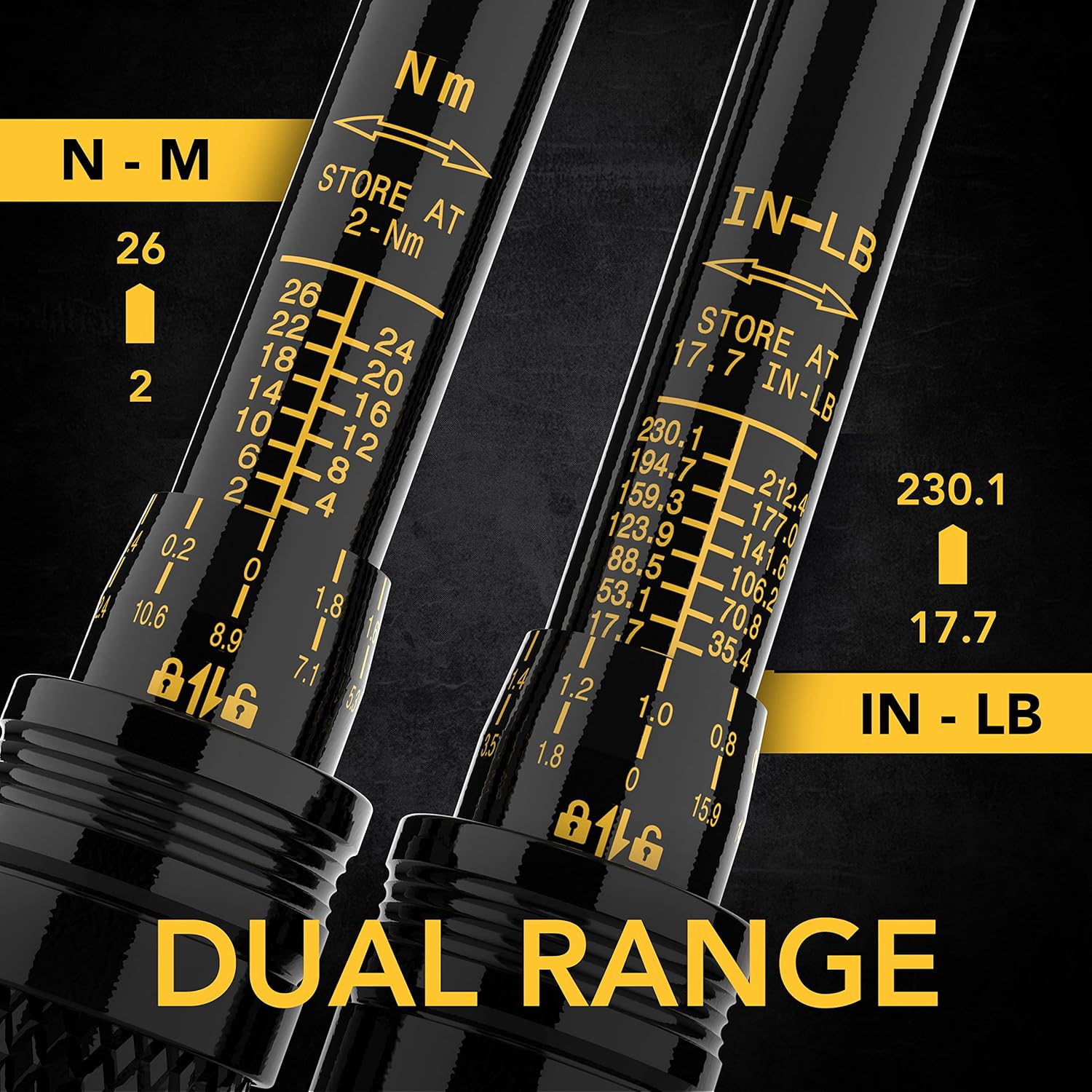
LEXIVON LX-191
$59.97
In stock on Amazon
Check price on AmazonPremium Range: Professional Tools for Small Shops and Serious Home Mechanics
Above $180, the meaningful gains are calibration traceability, wider torque range coverage, and build durability under daily shop use. The CDI Torque line (a Snap-on brand) is frequently referenced in professional workshop contexts for professional-grade digital accuracy and long service intervals. At this level, digital wrenches typically include a calibration verification mode — a self-check routine that confirms the sensor is reading within spec before you begin work. Quality click wrenches at this tier use hardened internal components that resist spring fatigue better than mid-range units, extending the recalibration interval.
For small-shop mechanics or coaches maintaining multiple bikes regularly, the most practical premium investment is one of each type: a quality click wrench for fast, repetitive mid-torque work (cassettes, cranks, pedals), and a premium digital wrench for carbon cockpit installations and precision headset work. The combined cost is lower than the cost of one misapplied torque event on a $400 carbon bar.
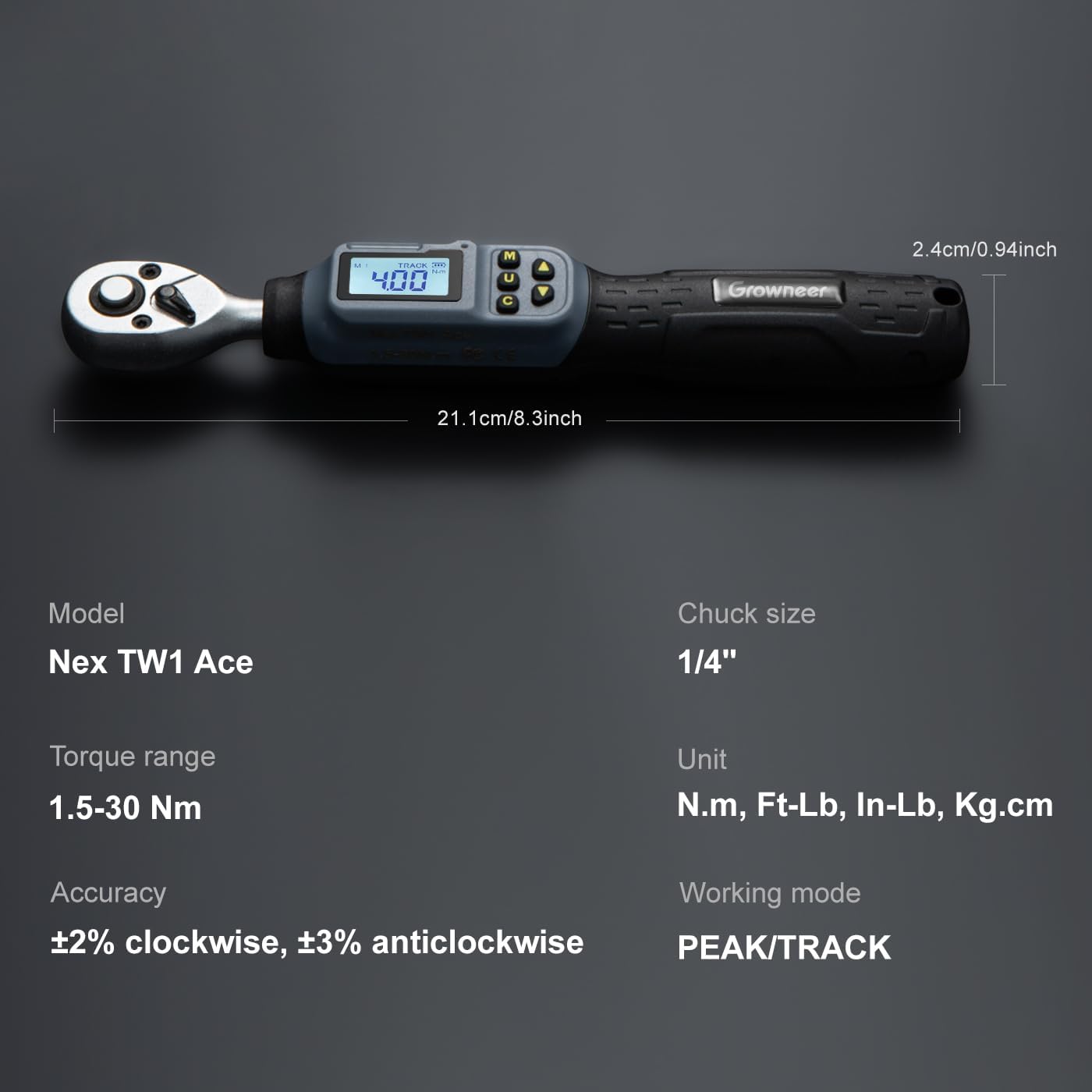
GROWNEER
$74.39
In stock on Amazon
Check price on AmazonHead-to-Head: Key Metrics at a Glance
| Metric | Click (quality mid-range) | Digital (quality mid-range) |
|---|---|---|
| Typical accuracy | ±3–4% clockwise | ±1–2% of reading |
| Low-torque reliability (≤5 Nm) | Build-quality dependent | Consistent if sensor quality is high |
| Recalibration interval (heavy shop use) | Every 12–18 months | Every 12–24 months (sensor-dependent) |
| Feedback channels | 1 (tactile/audible click) | 2–3 (display + buzzer + LED) |
| Battery required | No | Yes |
| Multi-setting workflow speed | Slower (manual collar reset) | Faster (button-set target) |
At the torque values typical in cycling — 4 to 25 Nm — the practical difference between ±1% and ±3% accuracy is small but not meaningless for carbon components. On a 5 Nm spec, ±3% means your actual torque could land anywhere from 4.85 to 5.15 Nm. That margin is safe for virtually all manufacturer specs, which are written with their own engineering tolerances built in. The accuracy premium on digital wrenches matters most when you’re working at the absolute edge of a component’s published limit — which careful mechanics try to avoid anyway.
Frequently Asked Questions
Does a digital torque wrench need calibration, and how often? Yes. The Park Tool Company’s Torque Wrench Use and Care Guide recommends professional calibration for any torque wrench used in regular shop environments, typically every one to two years. Digital wrenches use electronic sensors that can drift with temperature cycling and repeated use, just as click wrenches drift mechanically. Some professional digital models include a calibration verification mode; budget models typically do not.
Will a click torque wrench reliably signal at very low settings like 4 or 5 Nm for carbon bolts? It depends on the wrench’s build quality. A quality click mechanism rated for the low end of its range can deliver a reliable signal at 5 Nm. On inexpensive wrenches, the click becomes harder to feel and hear at the low end of the spring’s range. If your carbon work is concentrated below 6 Nm, either invest in a quality click wrench explicitly rated for that range or use a digital model, where the sensor’s behavior does not change significantly by torque magnitude.
What happens if my digital torque wrench battery dies mid-job? You stop. A digital wrench without power is not usable as a torque measuring tool — the sensor has no reference. Keep a spare battery in your toolkit. Most quality digital wrenches use standard AA or AAA cells to avoid proprietary battery dependency. Some models include a low-battery warning that provides a few sessions of lead time before the cell fails completely.
How do I read a dual-scale click wrench without making a math error? Most click wrenches with dual scales (Nm and ft-lb) use the main handle body ring for the primary scale and a fine-adjustment collar for incremental values. Read the main scale first, then add the collar value. The confusion usually comes from misidentifying which scale is active. Before setting any torque, confirm you’re reading the scale that matches your component specification — the majority of bicycle component specs are published in Nm, not ft-lb.
Should I store a click torque wrench at zero or at my most common setting? Store it at or near its lowest setting. As noted in the Park Tool Company’s Torque Wrench Use and Care Guide, releasing spring tension after use by winding the setting down toward the minimum is a standard maintenance practice. Storing a click wrench under tension for extended periods can cause the spring to take a permanent set, shifting calibration downward over time. This single habit meaningfully extends the working life and accuracy of any click-type wrench.
The bottom line is this: both technologies solve the same problem, but they solve it differently. The click wrench rewards mechanical intuition and confidence in tactile feedback; the digital wrench rewards visual thinkers and multi-setting workflows. Know which kind of mechanic you are, verify dual-feedback quality on any digital model you consider, and plan for recalibration regardless of which type you buy. Either way, you’re protecting components worth far more than the wrench itself — which is exactly the right frame for any tool purchase on a performance bike.