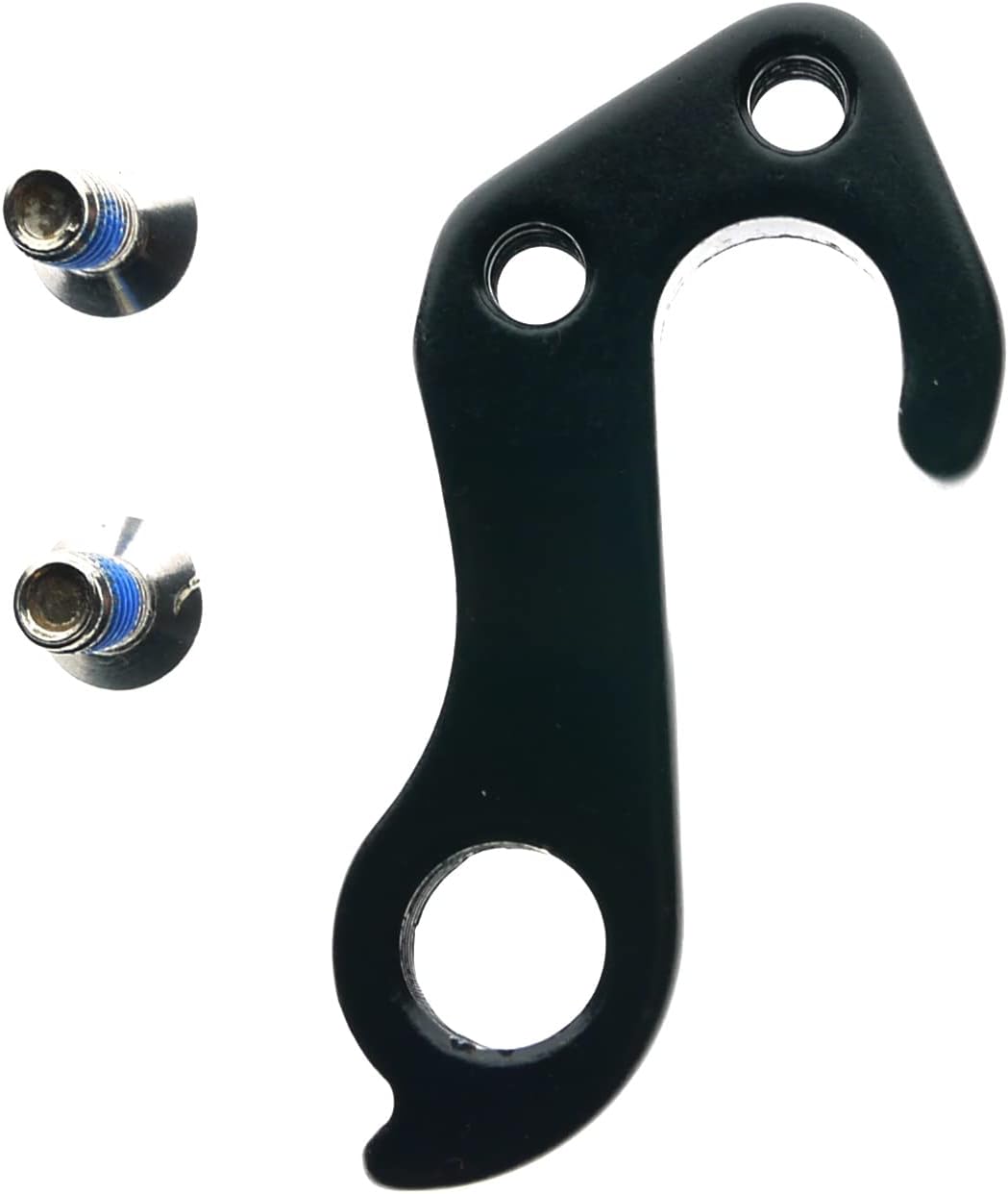
Picture this: you’ve been riding bikes for fifty years. You’ve replaced cables, bled brakes, overhauled bottom brackets. You thought you knew the whole landscape. Then one day you clip a rock on a trail descent, your rear derailleur swings back awkwardly, and your shifting turns to mush. A quick look confirms the problem — a small, bolt-on metal tab connecting your derailleur to the frame has bent. That tab is called a derailleur hanger (also called a dropout hanger or mech hanger), and its entire job in life is to be the sacrificial weak point that bends or breaks before your frame or derailleur does. So far, so good. But here’s the part that surprises almost everyone the first time: there is no standard hanger. Every manufacturer — Giant, Trek, Specialized, Cannondale, Cervélo, Yeti — designs its own dropout geometry. That means the hanger is unique to your specific frame model and sometimes even to your model year. Get the wrong one and it simply will not bolt on. This guide walks you through how to find the right hanger for your exact bike, explains the databases and part-number systems that cut the search time dramatically, and gives you an honest read on what “universal” means in the one case it’s actually true.
Why Every Manufacturer Uses a Different Geometry — and Why That Matters for You
The short, unsatisfying answer is that dropout geometry is proprietary. Frame designers are free to set the mounting hole position, the hanger’s axle-clearance slot depth, the bolt pattern, and the thickness of the tab however they choose. Sheldon Brown’s notes on rear dropouts catalog the sheer variety of these shapes going back decades, and the number has only grown as disc brakes, thru-axles, and carbon layup requirements have pushed designers further from any de facto standard.
This matters practically because even within one brand, the hanger can change between model years or between price tiers. A 2019 Trek Checkpoint and a 2022 Trek Checkpoint use different hangers. A Giant TCR Advanced Pro and a Giant TCR SL may look like the same bike in photos but accept different parts. The experienced 50-year cyclist who discovers this for the first time isn’t missing some obvious knowledge — it’s a genuinely obscure corner of bicycle anatomy that only reveals itself when something goes wrong.
The tradeoff you’re managing is specificity against availability. A hanger that fits perfectly is a five-minute swap. A hanger that’s slightly wrong — even by a millimeter in hole position — will either refuse to bolt on or will shift inconsistently because the derailleur pivot point is off. There is no middle ground. Across aggregated owner reviews, the pattern is binary: “fit like a glove” or “completely wrong part, had to reorder.” That binary outcome is exactly why getting the identification step right is more important than any other variable, including brand preference or material choice.
How to Find Your Exact Hanger: OEM Numbers, Databases, and Frame Tags
Start with the frame itself
Before you open a browser, check three physical places:
- Owner’s manual or warranty card — Trek, Specialized, and Giant all historically print the hanger part number in the documentation. If you have a paper manual in a drawer somewhere, this is the fastest path.
- The dropout itself — Some manufacturers stamp a part number directly on the hanger. It may be very small; use a flashlight and read it with the wheel removed.
- The manufacturer’s website — Most major brands maintain a spare-parts finder indexed by model name and year. Trek’s Parts and Accessories section, Specialized’s Spares catalog, and Giant’s OEM accessories page all allow you to filter by bike model. This is your authoritative source because it reflects any mid-production-year revision the manufacturer may have made.
If you’ve lost your manual and the dropout is blank, you need a cross-reference database.
The Wheels Manufacturing database
One tool that comes up repeatedly in owner-sourced repair guidance is the Wheels Manufacturing Derailleur Hanger Reference Database. Wheels Manufacturing is a Colorado-based component manufacturer with an unusually comprehensive cross-reference library — owners and shop mechanics consistently name it as a starting point when the OEM part number is unknown. You search by brand and frame model name; the database returns a Wheels Manufacturing hanger number that fits that frame along with a compatibility note. This won’t replace a manufacturer-direct lookup for a brand-new model (new frames sometimes outpace the database), but for anything more than a season old it’s one of the most reliable public cross-reference tools available.
BikeRadar’s derailleur hanger explainer also recommends starting with the brand’s own spare-parts documentation before moving to third-party databases, a sequencing that matches what working shop mechanics report.
What to record before you buy
Write down these five things before any purchase:
| Information | Where to find it |
|---|---|
| Brand | Head tube decal / receipt |
| Exact model name | Frame decal — not marketing name |
| Model year | Receipt, registration, or frame serial prefix |
| Axle type | Quick-release, thru-axle (note diameter: 12mm or 15mm) |
| Brake type | Rim or disc — affects dropout clearance |
Axle type is particularly easy to get wrong. A quick-release dropout hanger has a horizontal slot; a thru-axle dropout hanger has a round hole and different mounting geometry entirely. These are not interchangeable even when the brand and model name match.
What “Universal” Actually Means: SRAM UDH Explained
The phrase “universal derailleur hanger” appears in product listings for two completely different things, and conflating them is the single most common purchasing mistake in this category.
Generic “universal” hangers — usually priced low, often described as fitting multiple brands — are not truly universal. They are typically designed to fit one or two common dropout geometries and are marketed loosely. Owner reviews of these parts are mixed specifically because buyers assume broader compatibility than exists. If the specific frame models are not listed in the compatibility data, treat the word “universal” as marketing language and keep looking.
SRAM UDH (Universal Derailleur Hanger) is a different and specific standard. SRAM introduced UDH as a frame-level specification: frame manufacturers who build to UDH spec machine an identical dropout geometry, and any SRAM UDH hanger fits any UDH-compatible frame regardless of brand. As of 2026, frames from Specialized, Orbea, Trek, Canyon, Pivot, and many others ship with UDH-compatible dropouts, and SRAM’s own technical documentation for UDH lists the current compatible frame roster.
The critical clarification — which SRAM’s UDH documentation addresses directly — is that UDH is not backward compatible. If your frame predates UDH adoption, or if your frame manufacturer chose not to implement UDH, you cannot use a UDH hanger. The hanger will not physically fit. The only way to know if your frame is UDH-compatible is to check the frame specification sheet or contact the manufacturer. SRAM’s website maintains a UDH compatibility list that is the authoritative reference.
One legitimate question that puzzles first-time UDH buyers: why does a genuine SRAM-branded UDH hanger include plastic or polymer components? This is not a quality defect. SRAM UDH is designed as a full system in which the hanger integrates with a specific b-knuckle on SRAM Transmission derailleurs. The polymer elements are intentional parts of that interface. Owner reviews that flag this as a concern are typically from buyers who are unfamiliar with how UDH differs from a traditional metal dropout hanger — understanding the system resolves the confusion.
By the numbers — UDH vs. traditional hanger sourcing:
- UDH-compatible frames: 50+ manufacturers as of early 2026 (per SRAM UDH documentation)
- Traditional unique hanger SKUs in Wheels Manufacturing database: 1,000+
- Typical OEM hanger lead time at independent LBS: 1–14 days depending on distributor stock
- Typical online availability for common hangers: same-day to next-day shipping from major e-commerce fulfillment
The LBS Two-Week Wait vs. Online Next-Day: What’s Actually Going On
A reviewer comment that shows up frequently in hanger purchase discussions: the local bike shop quoted two weeks for a specific hanger while the same part was available online the next day. This is a real phenomenon and worth understanding without casting blame on either side.
Independent bike shops typically order through a small number of distributors — QBP, BTI, and J&B Importers being the major North American players. If a specific hanger SKU isn’t in the distributor’s current stock, the shop has to wait for the next shipment cycle. High-volume online retailers maintain their own warehouse stock of hundreds of hanger SKUs because hanger sales aggregate across many customers and justify the inventory investment. Neither model is wrong; they reflect different inventory economics.
The practical takeaway: if you need a hanger quickly, sourcing online from a retailer with confirmed stock is a legitimate option. If your shop has the part in hand or can get it within a timeframe you’re comfortable with, buying locally keeps money in your riding community. The repair itself doesn’t care which channel you used.
Material and Longevity: Aftermarket Aluminum vs. OEM
Most OEM hangers are 6061 or 7075 aluminum alloy. Most quality aftermarket hangers are the same alloys. The material difference between a well-made aftermarket hanger and an OEM part is typically negligible. What varies is manufacturing tolerance — specifically, how precisely the mounting hole and axle slot are machined relative to each other. A hanger with sloppy tolerances will cause erratic shifting even when it physically bolts on, because the derailleur pivot point will drift under load. Across owner reviews, the consistent differentiator between “shifts perfectly” and “never got it quite right” traces back to tolerance quality, not alloy grade.
The honest position: a quality aftermarket hanger from a manufacturer like Wheels Manufacturing, Tripeak, or Hangerhouse is a legitimate alternative to OEM when the OEM part is unavailable or discontinued. Riders with high-end groupsets — Campagnolo Super Record EPS, Shimano Dura-Ace Di2, SRAM Red AXS — should be especially careful about tolerance quality, since electronic shifting systems have less margin for mechanical slop than cable systems.
Should You Align or Replace? And Can You Bend a Hanger Straight?
Park Tool’s DAG-2.2 hanger alignment gauge documentation addresses this directly, and the answer the professional mechanic community has largely settled on is: replace, then align.
Here’s the logic. A bent hanger has been stressed past its design limit. Aluminum work-hardens and micro-cracks when bent; bending it back introduces a second stress cycle in an already-compromised part. You may get it visually straight, but the structural integrity is unpredictable. Given that hangers cost $10–$30 for most bikes, the cost of replacement is trivial compared to the risk of a second failure on the road or trail.
Once you’ve installed a new hanger, alignment is not optional — it’s the step that actually fixes your shifting. A new hanger that is even slightly out of plane will cause the same symptoms as a bent one: inconsistent indexing, ghost shifts, chain noise. Park Tool’s hanger alignment guide walks through the DAG-2.2 process, and BikeRadar’s derailleur hanger explainer notes that alignment is a standard post-install step in any professional shop. Doing it yourself requires the alignment gauge, but the technique is learnable.
Frequently Asked Questions
Is the SRAM Universal Derailleur Hanger truly universal, or does my frame need to be SRAM UDH-compatible? UDH is a frame-level standard, not a retrofit. Your frame must have been designed and manufactured to UDH spec. If it was, any UDH hanger fits. If it wasn’t, a UDH hanger will not physically mount. Check SRAM’s UDH compatibility list on sram.com or contact your frame manufacturer.
How do I find my Trek or Gary Fisher hanger part number if I’ve lost the owner’s manual? Trek’s Parts and Accessories section on trekbikes.com allows you to filter by model and year. Gary Fisher bikes (now folded into Trek) are also searchable there. The Wheels Manufacturing database is a solid backup cross-reference for older Gary Fisher models that predate Trek’s online catalog depth.
Why does my local bike shop need two weeks to get a hanger when it’s available online next day? Shops order through distributors with their own stock cycles. If a SKU isn’t in regional distributor stock, the shop waits for the next fulfillment run. Online retailers with large dedicated hanger inventories can ship from their own warehouse immediately. Neither is a reflection of shop quality — it’s a supply chain structure difference.
Do aftermarket aluminum hangers last as long as OEM parts? Material-for-material, quality aftermarket hangers in 6061 or 7075 aluminum perform comparably to OEM. The variable to watch is machining tolerance, not alloy grade. Poorly toleranced hangers cause indexing problems that may not show up until you’re riding under load.
Should I align my new hanger after installation or just ride and see if shifting improves? Align first. Riding on an unaligned hanger gives you ambiguous feedback — you won’t know if remaining shift issues are cable, limit screw, or hanger problems. Align the hanger with a DAG-style gauge, then index your derailleur fresh. That sequence isolates variables.
Can I bend my existing hanger back to straight, or do I need to replace it? The professional consensus is to replace. Aluminum bent under crash load is structurally compromised even when straightened. The cost of a new hanger is small; the cost of a second failure mid-ride is much larger. Bend it straight only as a get-home-from-the-trailhead measure, then replace before your next real ride.
If X, then Y — the decision rule:
- If your frame is 2020 or newer and built by a major manufacturer: check UDH compatibility first. If it’s there, source a UDH hanger and stop looking.
- If your frame is older or UDH isn’t listed: get your model year and exact model name, run the Wheels Manufacturing database, confirm against the OEM parts page, and buy the specific part number that matches both sources.
- If you’re running Dura-Ace Di2, Red AXS, or Super Record EPS: don’t compromise on hanger tolerance. Source OEM or a verified-tolerance aftermarket part — cheap generic hangers will cost you indexing precision that those groupsets were designed to deliver.
- When in doubt: replace the hanger, align it with a proper gauge, re-index, and then diagnose. In that order.