Portable Torque Wrenches You Can Actually Ride With: Mini and Travel Options Compared
If you’ve ever over-tightened a carbon handlebar clamp and heard that faint creak that wasn’t there before, you already understand why torque wrenches exist. A torque wrench is a tool that lets you apply a specific, measured amount of tightening force — expressed in Newton-meters (Nm), the standard unit used across virtually all bicycle component documentation — rather than guessing by feel. On aluminum bikes, feel is usually forgivable. On carbon fiber frames, stems, and seatposts, “feel” can mean a cracked component and a voided warranty. That’s the whole reason this category of tool exists.
The problem is that full-size torque wrenches are workshop animals. They’re long, heavy, and unwilling to fit anywhere smaller than a toolbox drawer. This article is about the alternative: compact, travel-friendly torque tools designed to slip into a jersey pocket, saddlebag, or bikepacking kit. We’ve dug into published manufacturer specifications, owner review patterns, and editorial coverage across four of the most discussed options — the Park Tool ATD-1.2, the Lezyne Torque Drive, the MARQUE torque wrench, and the Fanttik WB10 — to give you a straight comparison with clear tradeoffs.
Why “Good Enough” Isn’t Good Enough on a Carbon Bike
The stakes here are not abstract. A Velonews technical feature on why torque specs matter on carbon components makes the core issue plain: carbon fiber fails differently than metal. Metal bends and deforms before it breaks, giving you visible warning signs. Carbon can fail catastrophically at the point of stress concentration — often a bolt hole — with little or no visible warning. Most handlebar and stem manufacturers spec cockpit bolts in the 4–6 Nm range, and a Bikeradar buying guide covering the best torque wrenches for cyclists confirms that exceeding those specs by even 20–30% is enough to initiate micro-cracking in carbon layups over time.
That’s the case for any torque wrench. The case for a portable one is more situational but increasingly real. Gravel riders reassemble drop bags at aid stations. Bikepacking athletes swap saddle positions mid-route. Travel cyclists rebuild bikes from cardboard boxes in airport parking lots. In all of these scenarios, a pocket-sized torque tool prevents guesswork at exactly the moment guesswork is most likely.
The Contenders at a Glance
Before diving into individual tools, here’s a fast reference table. All specifications are drawn from each manufacturer’s published product documentation.
| Tool | Type | Nm Range | Drive Size | Weight (approx.) |
|---|---|---|---|---|
| Park Tool ATD-1.2 | Adjustable click | 2–10 Nm | 1/4” hex bits | ~140 g |
| Lezyne Torque Drive | Preset / fixed | 4, 5, 6 Nm | Integrated bits | ~85 g |
| MARQUE Torque Wrench | Adjustable click | 2–10 Nm | 1/4” hex bits | ~120 g |
| Fanttik WB10 | Adjustable click | 1–25 Nm | 1/4” hex bits | ~200 g |
Weight figures reflect the tool body; bit kits may add a small amount. These tools represent three distinct tiers of the portable torque category — each suited to a different rider profile.
Tool-by-Tool Comparison
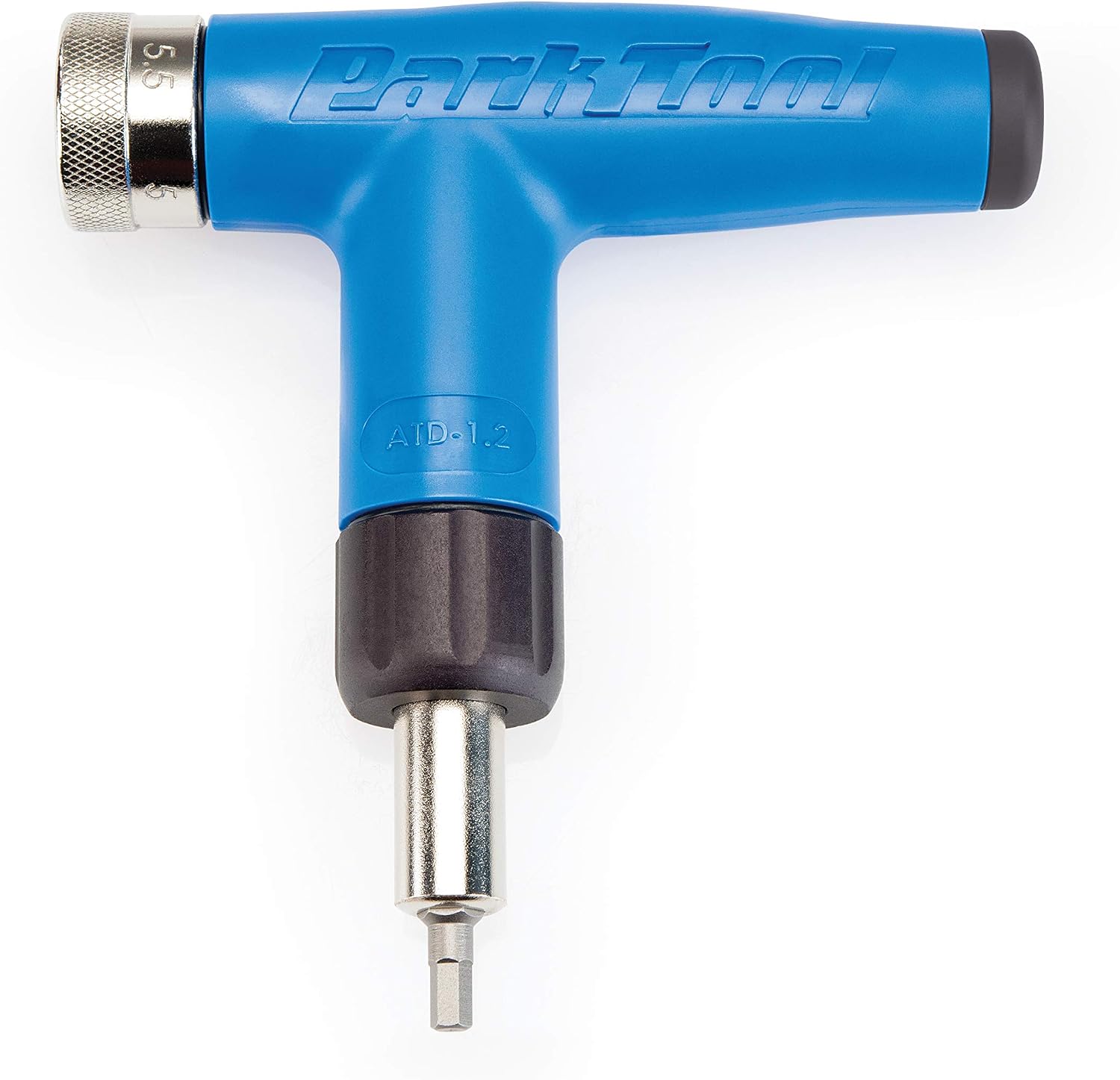
Park Tool ATD-1.2: The Default Answer for Most Riders
Park
$79.95
In stock on Amazon
Check price on AmazonIf you’ve spent any time in cycling forums or asked a shop mechanic which portable torque wrench to buy, there’s a strong chance they said “just get the Park Tool.” The ATD-1.2 is the most frequently recommended tool in this category, and owner review patterns consistently surface the same phrase: if you’re buying just one torque wrench for your bike, this is it.
The reason is reliability and legibility. The ATD-1.2 uses a click-type mechanism — you set your target torque on a clearly marked adjustment dial, tighten until you hear and feel the click, and stop. The click is tactile enough to register through light gloves. Per Park Tool’s published ATD-1.2 product specification sheet, the adjustment range runs from 2 to 10 Nm, which covers the vast majority of cockpit bolts on both aluminum and carbon bikes — stem faceplate bolts, handlebar clamp bolts, and seatpost clamp bolts all typically land in this window.
Where it hits a ceiling: That 10 Nm maximum matters. Per Park Tool’s product documentation, bottom bracket cups, crankarm bolts, and cassette lockrings all require significantly higher torque — often 35–50 Nm for a threaded bottom bracket, and 8–14 Nm for typical crankarm pinch bolts. The ATD-1.2 is not designed for those ranges and does not reach them. Owners who discover this post-purchase report frustration, particularly those who expected a single tool to cover the entire bike. It doesn’t. For cockpit setup on a carbon road or gravel bike, it’s excellent. For drivetrain work, a separate tool is required.
The included bit set covers T25, T30, and common hex sizes. Sheldon Brown’s Bicycle Technical Information page on stems and handlebars notes that some older or boutique headset and stem designs use uncommon bit profiles — worth verifying your own fastener inventory before a long trip, regardless of which tool you choose.
Park
$79.95
In stock on Amazon
Check price on AmazonLezyne Torque Drive: Machining Quality With a Critical Caveat
Fanttik
$99.99
In stock on Amazon
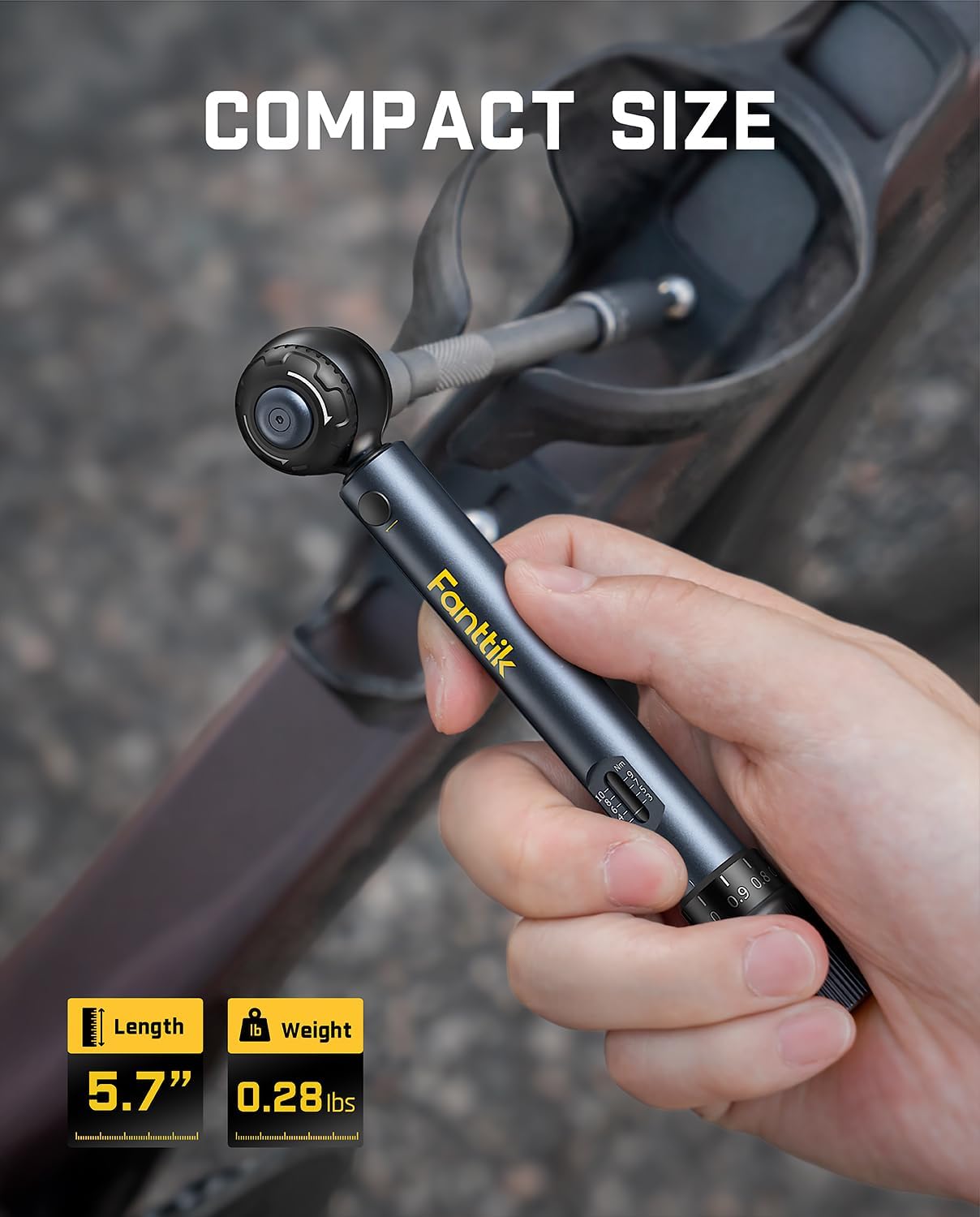
Check price on AmazonLezyne makes gear that looks like it belongs on a carbon fiber bike, and the Torque Drive is no exception. Owners are consistently effusive about the machining quality — the knurling, the finish, the magnetic bit tip that holds bits securely during use. For a tool you’re dropping into a saddlebag, magnetic bit retention is not a small thing; losing a bit mid-ride is a genuine failure mode.
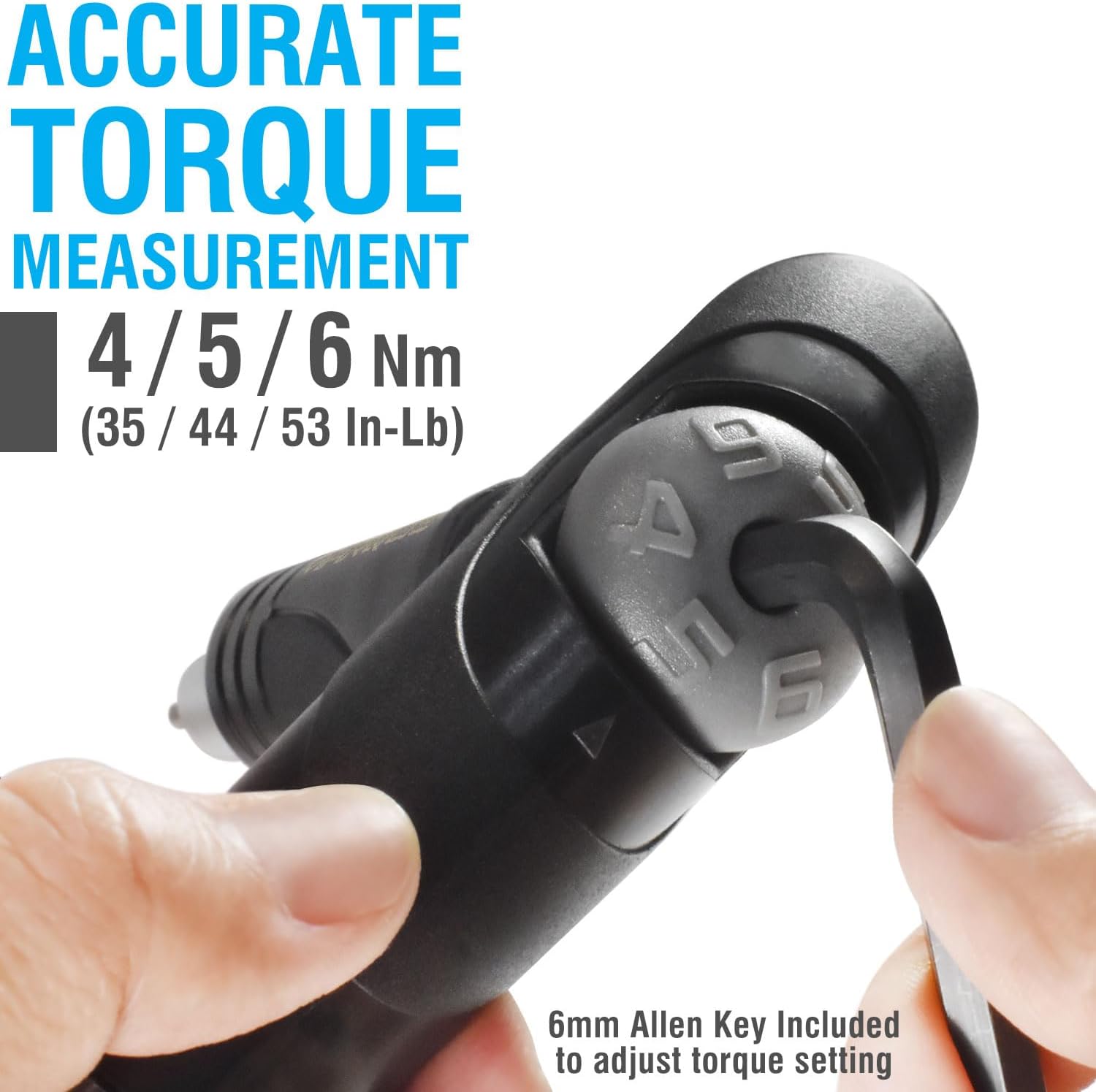
The Torque Drive uses a preset, dial-type mechanism with fixed torque settings — typically 4, 5, and 6 Nm depending on configuration, as published in Lezyne’s product specification materials. You rotate to your target setting, tighten until the tool slips or clicks at the preset threshold, and you’re done. There’s no adjustable scale to misread — that’s both its primary strength and its key limitation.
The safety note you need to read: Across owner reviews, one pattern emerges repeatedly and clearly: the Lezyne Torque Drive should be used only for final torque tightening, not for breaking loose stuck or over-tightened bolts. Using the tool to loosen bolts stresses the preset mechanism in reverse, which can knock it out of calibration. This is not a minor edge case; it’s something multiple long-term owners flag explicitly. The correct workflow is to break a bolt loose with a standard hex key or multi-tool first, then switch to the Torque Drive for final torque confirmation.
At 4, 5, and 6 Nm, the Torque Drive covers the sweet spot for carbon cockpit bolts. It won’t help you with anything higher. If your stem calls for 7 Nm or your seatpost clamp specs 8 Nm, you’d need a different tool or a different configuration. Check your component documentation — most manufacturers print the torque spec directly on the component — before purchasing.
Fanttik
$99.99
In stock on Amazon
Check price on AmazonMARQUE: Packable Simplicity With a Bit Kit Gap
MARQUE
$38.99
In stock on Amazon
Check price on AmazonThe MARQUE torque wrench occupies similar functional territory to the Park Tool ATD-1.2 — adjustable, click-type, covering 2–10 Nm — but owner feedback consistently highlights two things: it is genuinely compact and efficient to pack, and the included bit selection does not cover every bike’s fasteners.
That second point deserves attention. Multiple owners have specifically noted that the bits included in the standard MARQUE kit did not match all of their bike’s fastener profiles. This is a real compatibility issue. Many modern carbon bikes use a mix of T25, T30, T10, and M4/M5 hex bolts across the cockpit alone. A bit kit that covers five of seven fastener types doesn’t help you at the trailhead when bolt number six is the one that’s loose.
The fix is straightforward: before you commit the MARQUE to your travel kit, audit every fastener on your cockpit, saddle, and anything else you might need to adjust on the road. A supplemental set of 1/4” hex bits — available at any hardware retailer — pre-loaded into your kit solves the core complaint in a single one-time step.
Where the MARQUE earns its place is pack efficiency. Riders who’ve switched from the ATD-1.2 to the MARQUE often do so specifically because it tucks more efficiently into a compact saddlebag. If volume and grams matter more than the most comprehensive bit selection, that tradeoff may be worth making — provided you’ve done the fastener audit first.
MARQUE
$38.99
In stock on Amazon
Check price on AmazonFanttik WB10: The Widest Range, the Biggest Footprint
Park
$79.95
In stock on Amazon
Check price on AmazonThe Fanttik WB10 is a different kind of tool. Owner reviews skew noticeably toward newer cyclists — riders who recently purchased a road bike, looked up their stem bolt torque spec, and realized they had no precise way to hit it. A Bikeradar buying guide covering torque wrenches for cyclists notes that this entry point into the torque wrench category is increasingly common as carbon components become accessible at mid-market price points.
The WB10’s standout specification is its range: 1–25 Nm. That covers cockpit bolts, seatpost bolts, and extends into territory — bottle cage bolts, some derailleur limit screws — that the other tools in this comparison don’t reach. It’s an adjustable click-type mechanism using standard 1/4” bits, and owners report that the click is reliable and audible under typical riding conditions.
The trade-off is size. At approximately 200 grams with bits, it is the heaviest option here. It fits comfortably in a frame bag or larger saddlebag, but it is not realistically a jersey pocket tool. If you’re bikepacking and your kit already includes shelter and food, you probably won’t notice the weight penalty. If you’re a weight-conscious road cyclist, you will.
For newer riders building out a first toolkit — which is clearly the primary buyer profile based on owner review patterns — the WB10’s wider range is genuinely useful precisely because you don’t yet know which jobs you’ll face. It’s a reasonable starter torque tool with room to grow into.
Park
$79.95
In stock on Amazon
Check price on AmazonFrequently Asked Questions
Can I use a portable torque wrench to loosen stuck bolts as well as tighten them?
For click-type and adjustable tools like the Park Tool ATD-1.2, MARQUE, and Fanttik WB10 — technically you can apply reverse force, but it is not recommended as standard practice. These mechanisms are calibrated for tightening direction; repeated reverse stress can affect calibration over time. For preset tools like the Lezyne Torque Drive, owners explicitly warn against using it to loosen bolts, as this can knock the preset mechanism out of calibration. The correct approach: break the bolt loose with a standard hex key or multi-tool, then switch to your torque wrench for final tightening.
What Nm range do I actually need for cockpit bolts on a carbon road or gravel bike?
Most carbon handlebar clamps, stem faceplates, and seatpost clamps fall in the 4–8 Nm range. Sheldon Brown’s Bicycle Technical Information reference pages on stems and handlebars, along with component manufacturer installation documentation from Shimano (available via SI Shimano’s technical documentation library) and SRAM (available via SRAM’s technical resources), consistently land in this window. A tool covering 2–10 Nm handles virtually all cockpit scenarios. Anything requiring higher torque — crankarms, bottom brackets, cassettes — is outside portable wrench territory and belongs in a workshop setting.
Will a 4 Nm or 5 Nm fixed setting work for every stem bolt?
No. Stem bolt torque specs vary by manufacturer and material. Many carbon-compatible stems spec between 4–6 Nm, but some specify as high as 8 Nm, especially on seatpost clamps and alloy-on-alloy interfaces. A single fixed preset is useful for final confirmation on a known spec, but it is not a universal solution. Always check your component documentation — it is usually printed directly on the component or included in the manufacturer’s installation guide.
How do I store bits so they don’t rattle loose inside a saddlebag?
Dedicated bit cases with individual retention — foam inserts, magnetic trays, or snap-fit holders — are the most reliable approach. Several riders wrap their bit sets in a short strip of tubeless tire plug material or inner tube rubber. It’s cheap, vibration-dampening, and adds no meaningful weight. Magnetic bit tips, like the one on the Lezyne Torque Drive, also help retain bits during use even if storage is handled separately.
Is a click-type or preset dial-type more reliable for trail-side use?
Both work reliably when used correctly. Click-type tools — ATD-1.2, MARQUE, Fanttik WB10 — give you flexibility across a range of torque specs, which is useful if you’re working on multiple bolt types. Preset tools like the Lezyne Torque Drive remove the possibility of misreading an adjustment dial. In practice, the biggest trail-side failure mode isn’t tool type — it’s using a torque wrench to break loose stuck bolts. Carry a basic multi-tool for loosening, and use the torque wrench only for final tightening.
The Decision Rule
Here’s the if/then framework for choosing:
- If you own one carbon bike and primarily need cockpit reassurance: The Park Tool ATD-1.2 is the honest default. Wide owner consensus, reliable click, clear adjustment range.
- If you want the most packable, premium-feeling tool and your specs fall at 4, 5, or 6 Nm: The Lezyne Torque Drive earns its price point — just apply the loosen-first rule before every use.
- If pack volume is your primary constraint and you’ll supplement the bit kit yourself: The MARQUE is worth considering. Do the fastener audit before you leave home.
- If you’re new to torque wrenches, own multiple bikes, or want one tool that covers more ground: The Fanttik WB10’s wider 1–25 Nm range makes it the more forgiving starting point, size penalty included.
None of these tools replaces a full workshop torque wrench for high-Nm drivetrain work. All four are legitimate tools for the job they’re designed to do — which is keeping your cockpit bolts honest when you’re away from the bench.